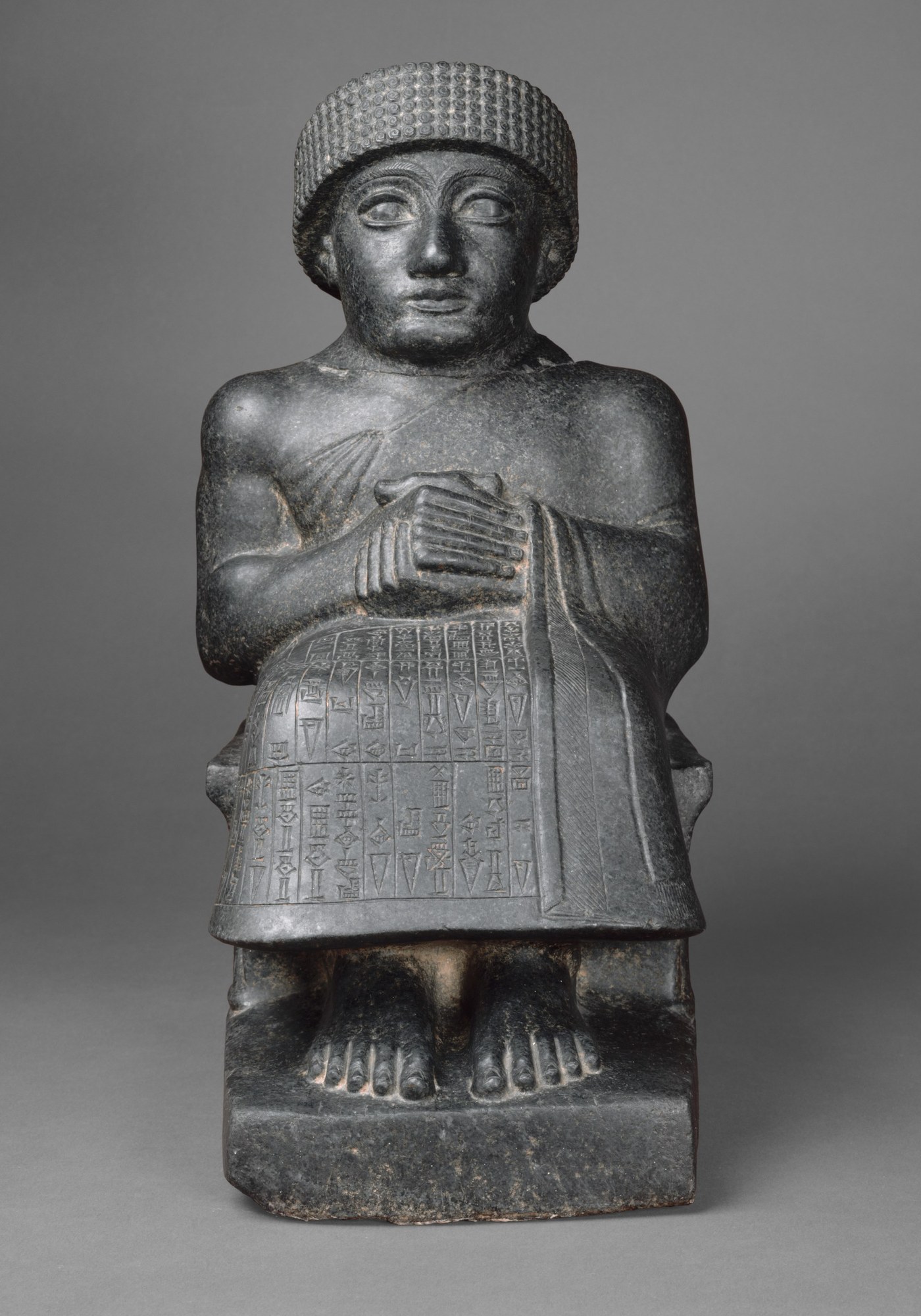
The strongest man in Sumer cannot get up. He has felled the cedar and killed Huwawa in his forest, he has carried the divine powers back to Sumer and set up stelae for men not yet born, and now he lies on a couch and cannot rise from it. The great wild bull has lain down and is never to rise again. So the poem says of him, over and over, capping each virtue with the same flat refrain until the praise itself becomes a dirge: he who knew how to climb the mountains has lain down and is never to rise again; the lord of Kulaba has lain down and is never to rise again. He cannot stand, cannot sit, cannot eat or drink. Something has him by the bolt of the door and will not let him through. The Sumerians called it NamtarThe Sumerian death-demon and vizier of the underworld, the power that fixes a mortal's fated hour and grips the dying., a force without hands or feet, a fate rather than a body. It has taken hold of the one man no army could defeat.
This is not the Gilgamesh most readers meet. The famous hero who crosses the sea to find a flood survivor and comes home empty-handed belongs to a long Akkadian epic put together between about 1300 and 1000 BCE. The dying king here belongs to an older Sumerian poem, copied around 1800 BCE and generally traced to the court poetry of the Third Dynasty of Ur, some two to three centuries older still, which puts perhaps eight hundred to a thousand years between the two poems.
They are different compositions in different languages, and this one sends its hero on no quest. The story unfolds at a sickbed, in a dream before the assembly of the gods, and later at a building site.
The great wild bull has lain down
For six days he lies ill. The text is broken here, but it preserves the image of sickness on his skin like resin. In the surviving lines, he is compared to a fish thrown on the ground and to a gazelle caught in a trap. The poem lingers with a patience that is almost cruel. It will not let the reader look away from the fact that the man who climbed every mountain is now measured by whether he can lift his own head, and every deed it recites ends at the same couch.
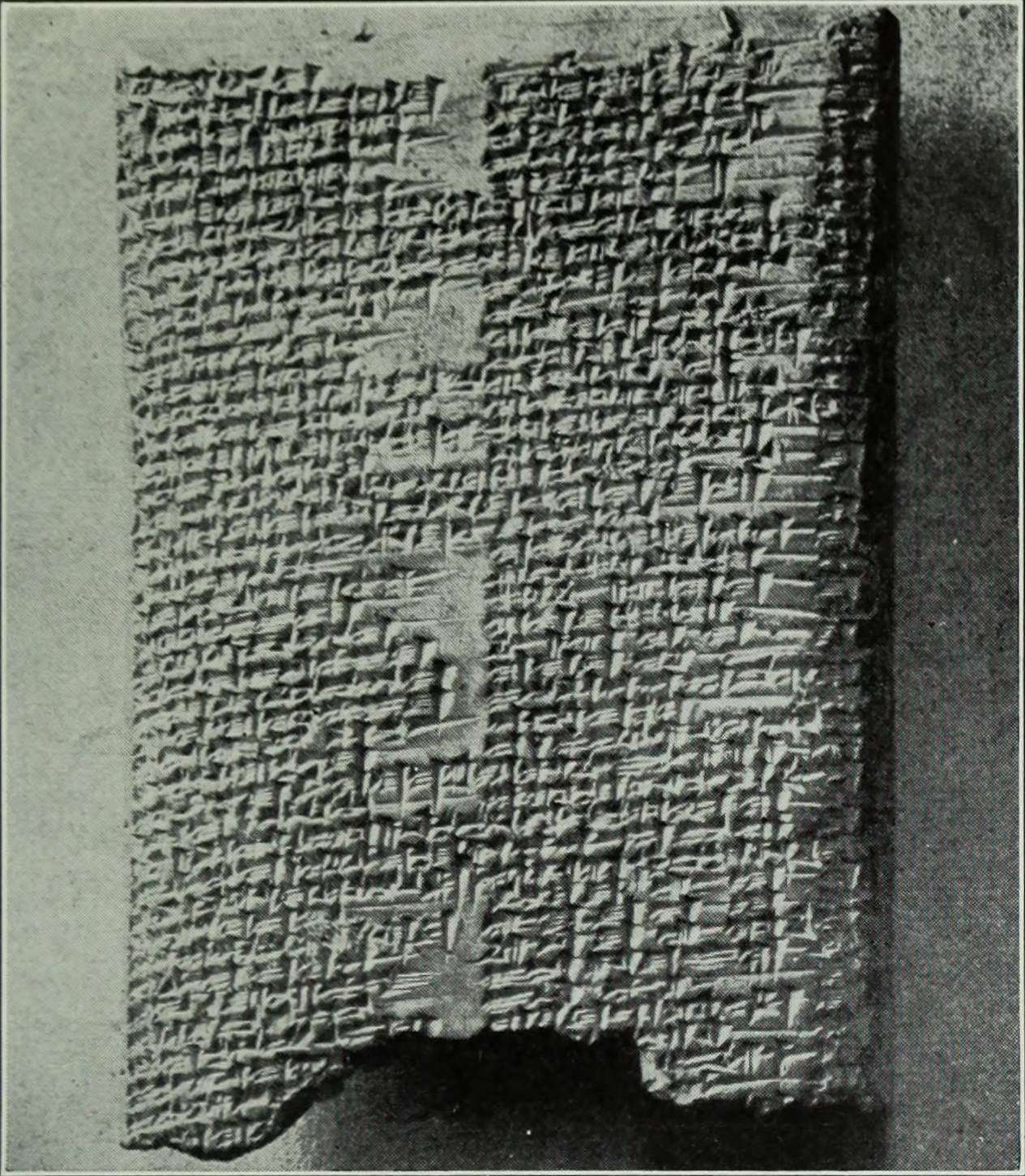
The poem survives in two forms, and it is worth knowing which version is speaking. The older Nippur tablets that Samuel Noah Kramer first pieced together in 1944 are badly broken, and the god-speeches in them come to us in scraps. The fuller version comes from Me-TuranA town on the Diyala, ancient Tell Haddad, whose tablets preserve this poem more fully than the older Nippur copies do., a town on the Diyala, whose tablets were edited only in 2000. Where they differ, the Me-Turan copy preserves the dream and the trial nearly whole, and that is the version this retelling follows.
The pre-eminent place of the gods
Then Gilgamesh dreams, and in the dream he is not in his bed at all. He has arrived at the assembly, the pre-eminent place of the gods, and they are talking about him. What follows is a trial, though no one calls it that.
The gods rehearse his life as if reading a case for the defence: he travelled every road there was, he brought cedar down from its mountains, he killed Huwawa in his forest, he founded temples and reached Zi-ud-suraThe one man the gods let survive the Flood and live forever; here he is not a place to reach but the exception the gods cite to prove no one else may. in his dwelling place, he restored to Sumer the rituals that had been forgotten. It is an impressive brief. The reader can feel it building toward a reward, toward the one thing a life like that might be thought to earn.
It earns him no such reward, because an old promise stands in the way. Enki, the god of wisdom, answers An and Enlil by reaching back to the Flood. In those distant days, he reminds them, the assembly loosed the deluge to wipe out the seed of mankind, and he alone spoke for life, so that one man came through it alive. That man was Zi-ud-sura, the flood survivor whom the Akkadian poets would later call Utnapishtim, a human being allowed to live forever.
But afterwards, Enki goes on, you made me swear by heaven and by earth that no human would ever be allowed to live forever again. The oath is the trap. Gilgamesh is two parts god through his mother, and Enki even asks whether that parentage might not let him slip free, but the answer is already sworn. The one exception the gods ever made is the very reason they can make no other.
A ghost who judges the dead
So the sentence is a compromise, and the poem does not tell us which god proposes it, only that another god speaks. Let Gilgamesh, he says, be a ghost below among the dead, and the governor of the nether world. Let him be pre-eminent among the shades, so that he judges the dead and renders verdicts, and what he says will be as weighty as the words of Ninĝišzida and Dumuzid.
It is a strange mercy: he does not escape death; he is given an office inside it, a king still, only in the world below, ruling the dead he is about to join. A god of dreams named Sisig, a son of the sun-god Utu, will carry a little light before him in the place of darkness, and at the festival of the ghosts in the month Nenegar no lamp will be lit for the dead without him. The consolation is real, but worth naming for what it is. It is not a happier afterlife. It is a job, a lamp, and a place in the calendar of mourning.
Enlil’s word is the seal on it. The Great Mountain, the father of the gods, has made kingship your destiny, the dying man is told, but not eternal life. He is told not to despair. This is only what being human involves, what the cutting of the umbilical cord already decided. And then the poem gives him the plainest catalogue of dying in Sumerian literature. The darkest day of humans awaits you now. The solitary place of humans awaits you now.
The unstoppable flood-wave, the unavoidable battle, the unequal struggle, the skirmish from which there is no escape, all of it awaits you now. But do not go down with your heart knotted in anger, they tell him. Let it be unravelled like palm-fibre and peeled like garlic. He will not be alone down there. His father and mother, his sisters, his friend Enkidu, his young comrade, all who went before him are waiting where the great gods sit at the funerary offerings, and they will come out to meet him. Then the young lord wakes, and knows the dream for what it was.
Open up the Euphrates
In this poem, the dying king’s next act is to build. A herald sounds the horn across all the lands with a single astonishing order. Unug, arise. Open up the Euphrates. Kulaba, arise. Divert the waters of the Euphrates. The whole city turns out, and it was not five or ten days before they had opened up the Euphrates and diverted its high water, and the sun-god Utu looks down with admiration at the river-shells laid bare in the drained bed.
There, in the dry channel where the Euphrates used to run, they build his tomb from stone: stone walls, stone door-leaves, a hard-stone bolt and thresholds, gold beams set into it, heavy blocks moved into place. Then they cover it over and let the river back, so that no one searching for it will ever find the tomb. The greatest tomb in the poem is the one no one is meant to see. A man who cannot live forever settles instead for a grave the river itself will guard.
In one ending, told in a further Nippur version, the household goes down with him. His beloved wife, his children, his favourite and his junior wife, his musician, his cup-bearer, his barber, his palace retainers and servants and his treasured objects are all laid in their places, as if in a purified palace in the middle of Uruk. The poem attests the motif; the comparison with the sacrificial retinues excavated at the Royal Cemetery of Ur is archaeological, not a claim the text makes.
And then Gilgamesh, in the last thing a king can do, sets out gifts for the powers of the world below: an audience-gift for Ereškigala its queen, presents for Namtar and for Neti the gatekeeper, for Ninĝišzida and Dumuzid, for a long roll of the dead priests and priestesses who went before. He goes down not as a supplicant but as a lord arriving with tribute.
Names that do not sink into oblivion
The poem does not end on the grave. It ends on a thought about memory. For all people, whoever they are, it says, funerary statues are made for days to come and set aside in the temples of the gods, and their names, once spoken, do not sink into oblivion. That is the answer this oldest Gilgamesh poem gives to the question the later epic would spend eleven tablets trying to answer differently.
There is no plant of life here, no sea to cross, no bitter homecoming. There is a man who dies, is given a title among the dead, and is remembered. The comfort the Sumerians offered was never that a body might last. It was that a name might, if the living keep saying it.
Gilgameš, lord of Kulaba, it is sweet to praise you. (The Death of Gilgameš, ETCSL 1.8.1.3, Me-Turan recension)
- The Death of Gilgameš (Sumerian; ETCSL 1.8.1.3), surviving in two recensions, the Nippur (Nibru) version and the fuller Me-Turan (Tell Haddad) version. Old Babylonian copies, c. 1800 BCE; the poem is generally traced to the Ur III royal-hymnic horizon, c. 2100–2000 BCE, roughly 800–1,000 years before the Standard Babylonian Akkadian epic. English wording follows the ETCSL composite translation (J. Black, G. Cunningham, E. Robson, G. Zólyomi et al., The Electronic Text Corpus of Sumerian Literature, Oxford; this composition adapted by G. Zólyomi). ETCSL marks breaks with ”…”, which are in the tablet, not editorial elisions. Quoted abovethe
never to rise again
dirge and thedoor-bolt of Namtar
(Segment A); the dream ofthe assembly, the pre-eminent place of the gods
and the deeds-catalogue (Me-Turan Segment F); Enki’s flood-oath speech (Me-Turan F 23–37); thegovernor of the nether world
verdict,as weighty as the words of Ninĝišzida and Dumuzid
(Me-Turan F 38–41; Nibru Segment C); Sisig giving light (Nibru Segment E);kingship your destiny, but not eternal life
and the doom-catalogue (Nibru E 12–27); the Euphrates diversion and stone tomb (Me-Turan Segment H); the household burial and gift-list (Another version from Nibru
); and the remembrance coda (Me-Turan Segment K). - **A. Cavigneaux & F. N. H. al-Rawi, *Gilgameš et la morttextes de Tell Haddad VI*** (Cuneiform Monographs 19, Groningen: Styx, 2000): the editio princeps of the fuller Me-Turan manuscripts, and the source of the clear dream, assembly, verdict and tomb material. In copyright; cited for provenance, dating and readings, not quoted verbatim.
- Samuel Noah Kramer,
The Death of Gilgamesh,
Bulletin of the American Schools of Oriental Research 94 (1944) 2–12the first reconstruction of the more broken Nippur manuscripts, and the foundational modern study. - Alhena Gadotti, Gilgamesh, Enkidu, and the Netherworld and the Sumerian Gilgamesh Cycle (Boston/BerlinDe Gruyter, 2014): for the modern hypothesis grouping four Sumerian Bilgames poems as a loose cycle. In copyright; a scholarly proposal, not an ancient book.
- Cross-reference only, not quotedthe Standard Babylonian Epic of Gilgamesh (A. R. George, The Babylonian Gilgamesh Epic, OUP 2003) and the sibling post
gilgamesh-search-for-immortality, for the later Akkadian treatment of mortality, roughly 800–1,000 years younger and a separate composition.