HomeArchiveThemesAbout
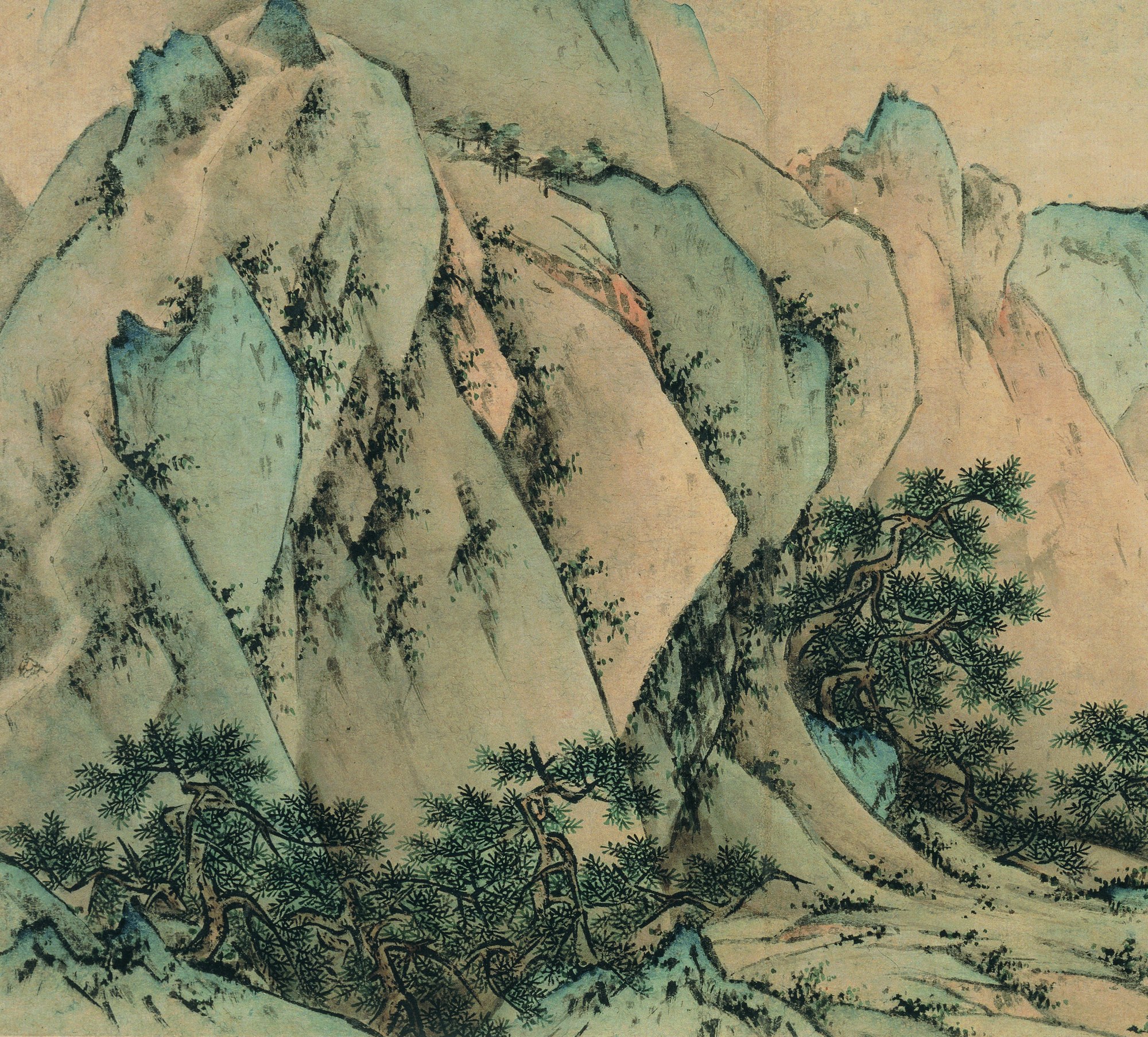
An ink-and-colour landscape of Mount Hua: towering pale blue-green rock walls riven by a dark vertical cleft, with wind-bent pines clustered at their base.
Featured · Chinese Pantheon

Chenxiang Splits the Mountain to Free His Mother

A boy is told his mother lies pinned under Mount Hua for the crime of marrying his father: how a folk-and-theatre tale of the Ming and Qing borrowed its splitting axe from a river-god fifteen centuries older.

Read the retelling

Latest Retellings

All articles
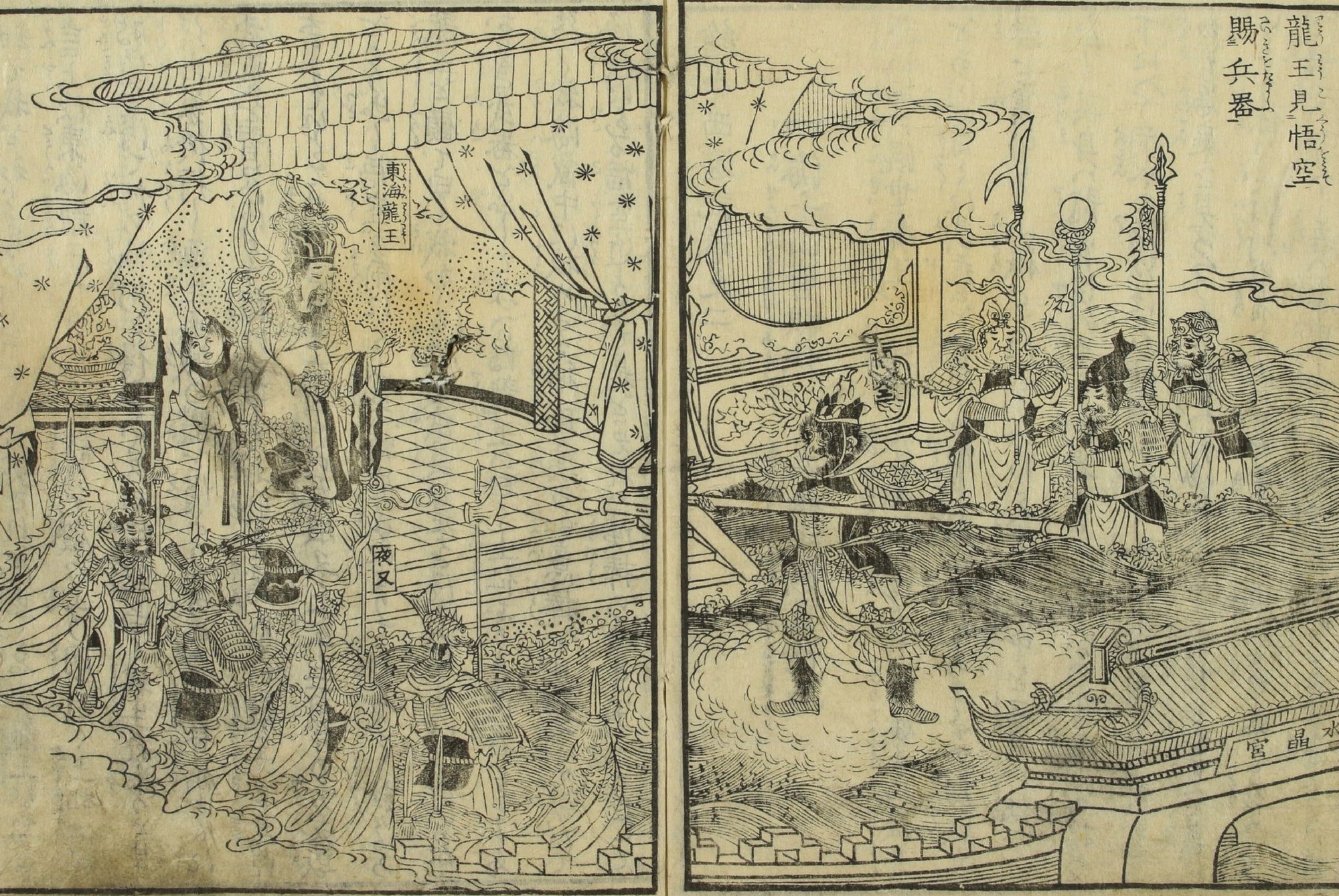
A monochrome woodblock line illustration of the East Sea Dragon King enthroned in his undersea Crystal Palace, bearded and crowned amid tiled halls and rolling waves, attended by courtiers, a fish-headed yaksha and armoured officers, as the monkey Sun Wukong stands on a cloud shouldering the great iron staff bestowed on him; a double-page plate from the Japanese Ehon Saiyūki.
Chinese

The Dragon Kings of the Four Seas

The four brothers surnamed Ao who rule the seas from crystal palaces are the youngest thing about the dragon king: a Ming novelist's quartet laid over a rain-dragon the Han knew seventeen centuries before, and a royal title borrowed from India in between.
7 min*Xiyouji*
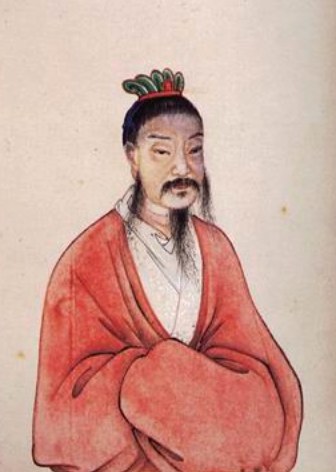
Hand-tinted woodblock portrait of Gaoyao, the upright Minister of Justice under Emperor Shun, shown half-length in red court robes and a crowned headdress, his hands folded within his sleeves.
Chinese

Gaoyao and Shun, the Minister of Justice

A sage-emperor hands the whole apparatus of punishment to one upright man, whose aim is to punish until no one need be punished. The beast that made him famous for smelling out the guilty is known to us only from the pen of a man calling it a fraud.

6 minShujing
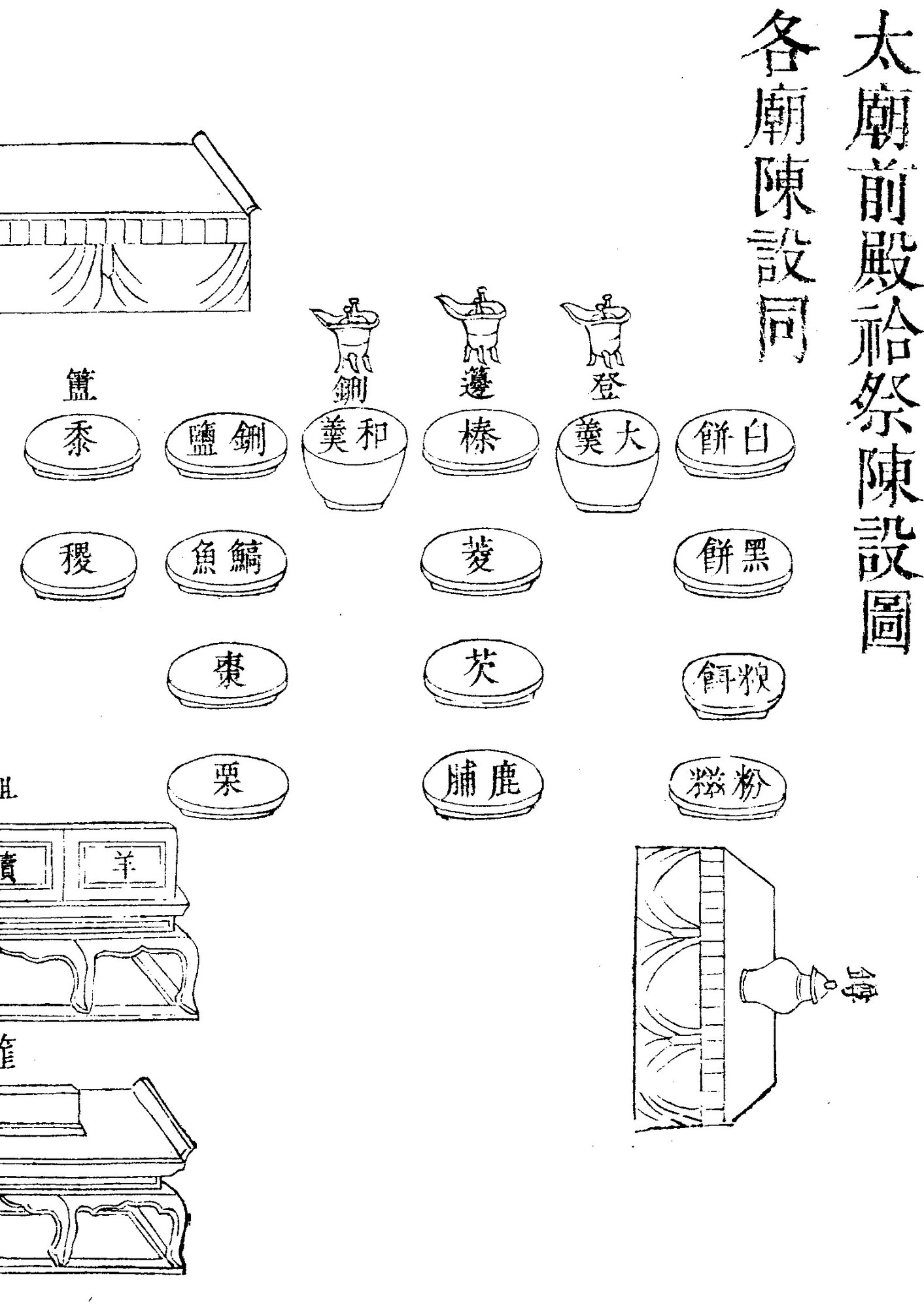
A Chinese woodblock line-illustration titled "Diagram of the Ritual Arrangement for the Great Collective Sacrifice in the Front Hall of the Imperial Ancestral Temple": the temple eaves at upper left and, ranged beneath, rows of labelled ritual dishes and stands — grain and salt, dried fish, dates and chestnuts, the bian, dou, deng and xing offering vessels, a wine-jar (zun), and the great-beast (tailao) meat stands bearing the sheep and pig — set out for the ancestral sacrifice.
Chinese

Ancestor Veneration and the Lineage Temple

The dead did not vanish. One soul rose bright into the air and one sank into the ground, and between them the living built a temple, seated a grandson in the ancestor's chair, and fed him until he spoke the blessing back.

8 min*Liji*
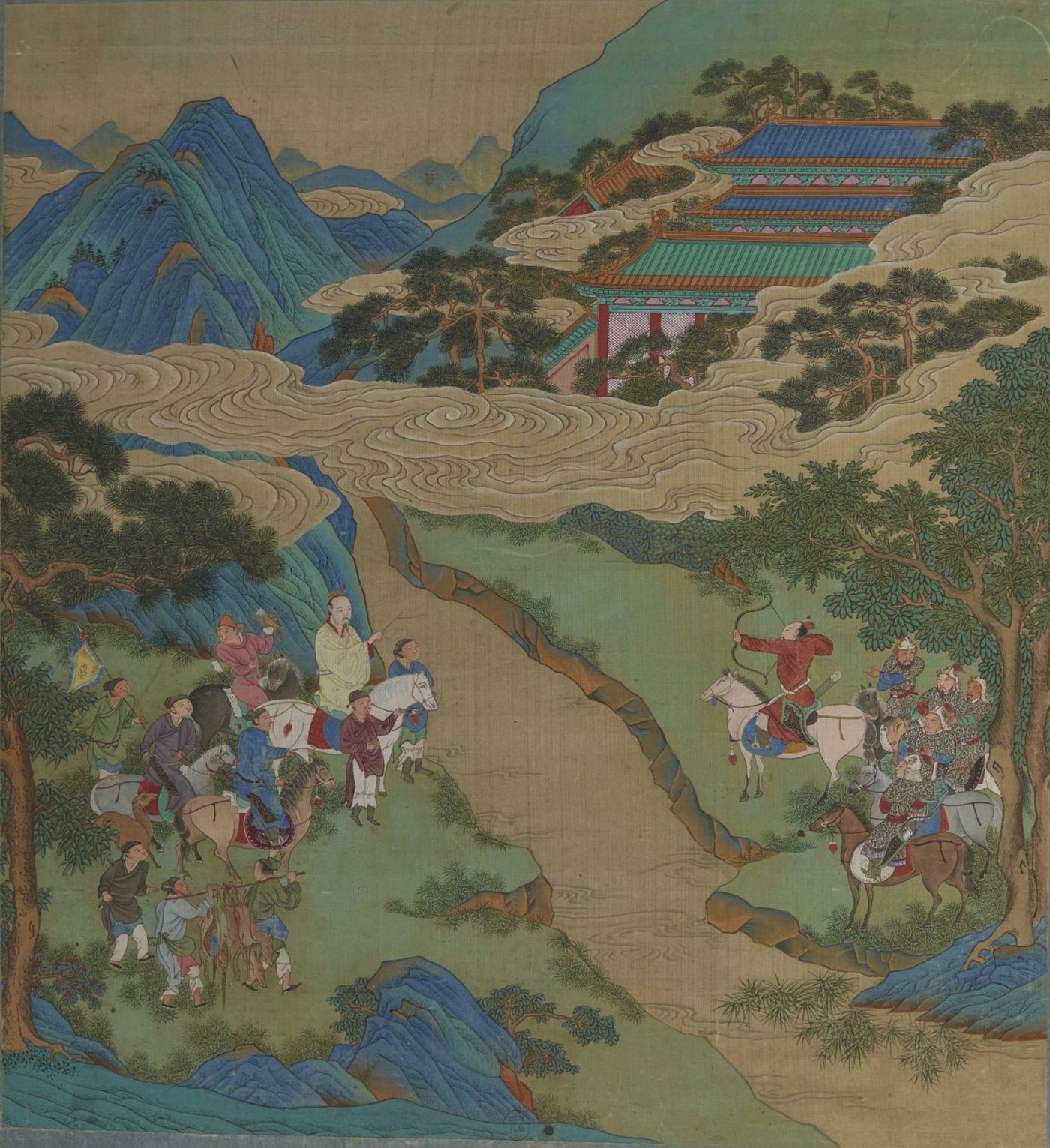
A blue-green silk painting: the archer Yi on a white horse drawing his bow, ringed by armoured horsemen, with a falconing party at left and a palace set among mountains beyond
Chinese

Hou Yi, Archer of the Ten Suns

Every child knows the archer who shot down the suns. Almost no one can say who he was: a god sent from heaven, a mortal who seized a throne, or two men fused into one by centuries of retelling.

6 minHuainanzi
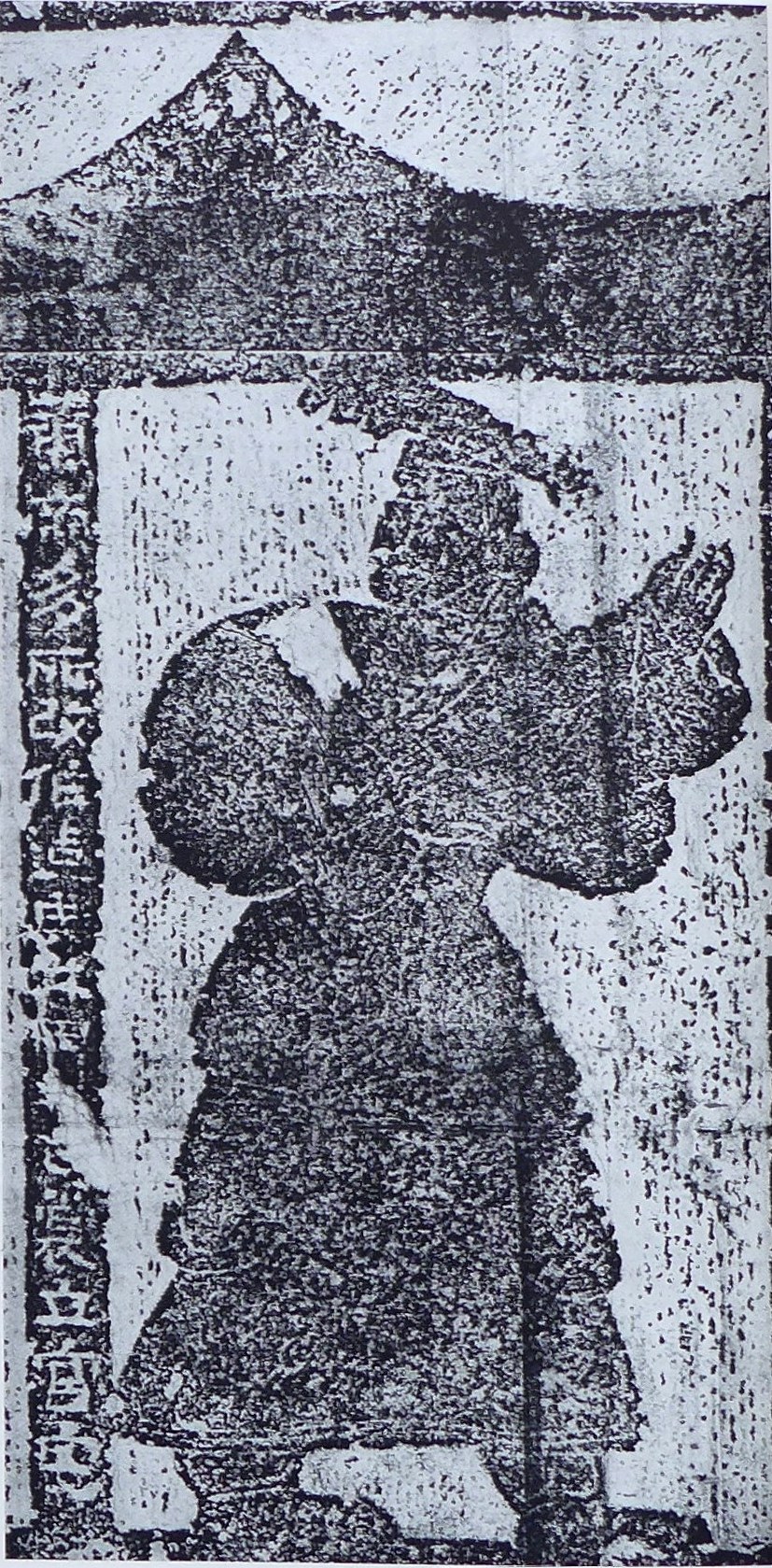
Ink rubbing of a Han-dynasty carved stone relief from the Wu Family Shrines showing the Yellow Emperor as a robed standing sovereign beneath a gabled canopy, one hand raised, a vertical cartouche of incised characters down the left edge naming him and his inventions; the figure and inscription read as light forms against the mottled dark ground of the rubbing.
Chinese

Huangdi, the Yellow Sovereign

He conquered the four quarters, named his ministers after clouds, and fathered the whole line of emperors, then cast a cauldron, mounted a whiskered dragon, and rose into heaven while the people below clutched at his falling bow.

9 minSima Qian
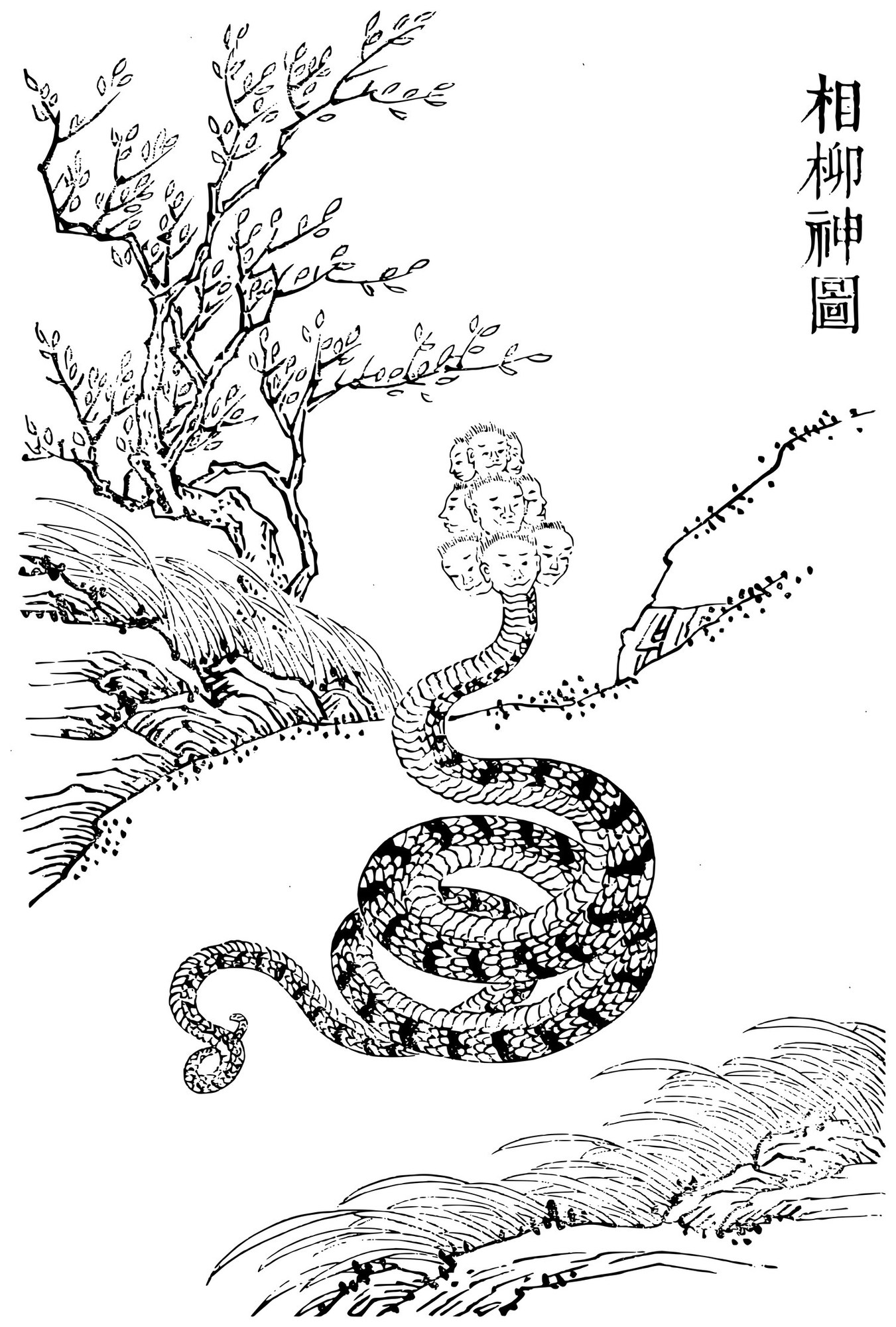
A Chinese woodblock line-illustration of Xiangliu: a cluster of nine human-faced heads rising on a single serpent neck above a heavily coiled, banded snake body with the tail curling free, set against a bare tree, a rocky bank and grassy ground; the title 相柳神圖 (Picture of the God Xiangliu) inscribed at upper right.
Chinese

Xiangliu, the Nine-Headed Serpent

Nine heads on one blue-green coil, feeding on nine mountains at once: Gonggong's minister, whose foul blood poisoned the ground so no grain would grow and no beast could live there.

6 minShanhaijing 山海經

The archive keeps growing.

Every retelling is drawn from the poets who first told it. Hesiod, Homer, Ovid, the Eddas. The sources are kept honest.