HomePantheonsThemesAbout

#Fate

Destiny, prophecy, the inescapable — and whether gods are bound by it.

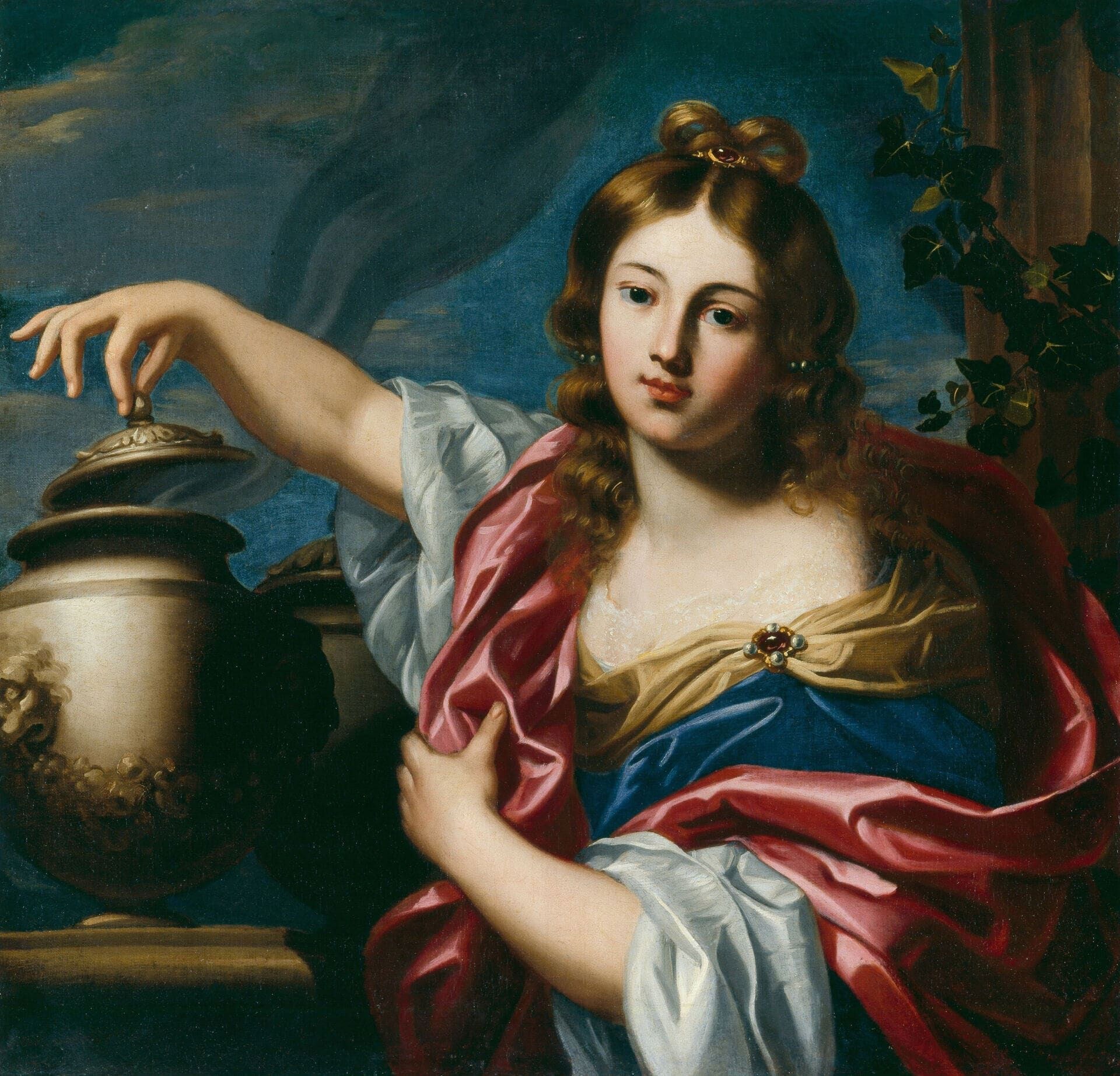
A young woman with loose auburn hair, in a blue gown under a rose-red mantle with a jewelled clasp, rests her right hand on the ornamented lid of a great lidded ceramic jar at the left — a satyr-mask moulded on its swelling belly — as if about to lift it; ivy climbs a broken pillar behind her against a stormy blue sky.
Greek

Pandora, the First Woman

The gods pooled their gifts to build one flawless girl, then handed her to mankind as a punishment; when she lifted the lid of a jar, only Hope stayed behind.

5 minHesiod
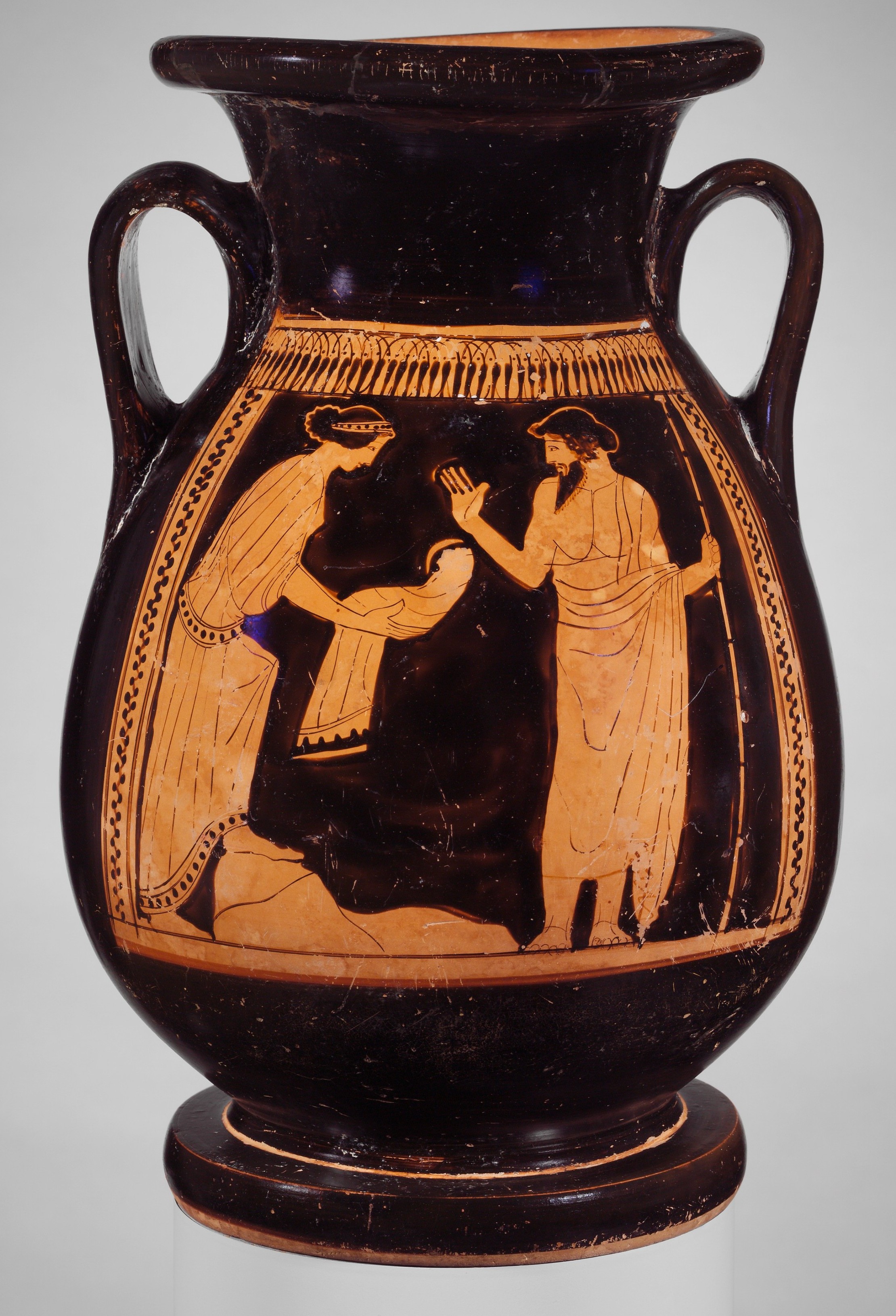
An Attic red-figure pelike, the whole black-glazed vessel standing against a plain grey ground, its belly panel bordered by a band of tongues above and running dot-chains at the sides. In the scene the Titaness Rhea, at left in a long pleated chiton and mantle with her hair bound in a fillet, steps forward and holds out in both hands the stone wrapped in swaddling clothes; facing her at right the bearded Kronos, in a himation that leaves one shoulder bare and a soft cap, grips a long sceptre in his trailing hand and raises his other hand to receive the bundle he believes is his newborn son — the swaddled-stone deception that founds the ruling family.
Greek

The Twelve Olympians: The Ruling Family

There is no ancient list of the Twelve. What the oldest poets give us instead is a household with a throne room, a swallowed generation, and a family quarrel that never quite ends.

7 minHesiod
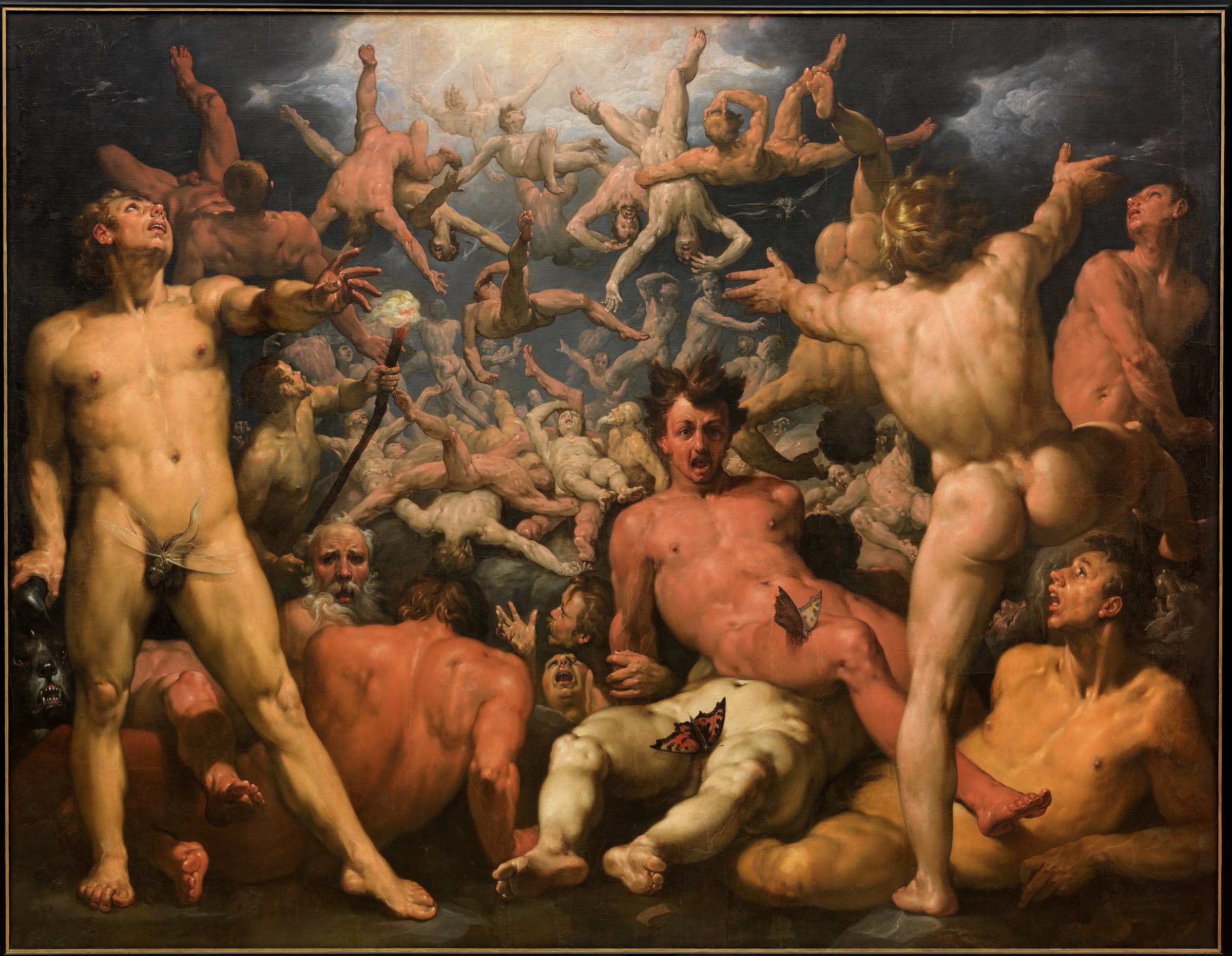
A dark, teeming Mannerist canvas of the defeated Titans hurled from the sky. From a luminous break in the storm-clouds at the top, a mass of muscular nude figures tumbles headlong and foreshortened into the depths, limbs flailing and faces contorted in terror. They pile into a heap of straining bodies across the foreground, ruddy and pale flesh tangled together; one massive figure sprawls face-up at the centre, mouth open in a scream, his hair standing on end. At the lower left a standing youth grips a burning torch while a black hound's fanged head snarls beside him, and a few small butterflies and insects — the painter's emblems of the fleeting — rest on the fallen limbs.
Greek

The Titanomachy

For ten years the sky itself hung in the balance, until Zeus loosed the hundred-armed prisoners of the deep and the world caught fire.

8 minHesiod
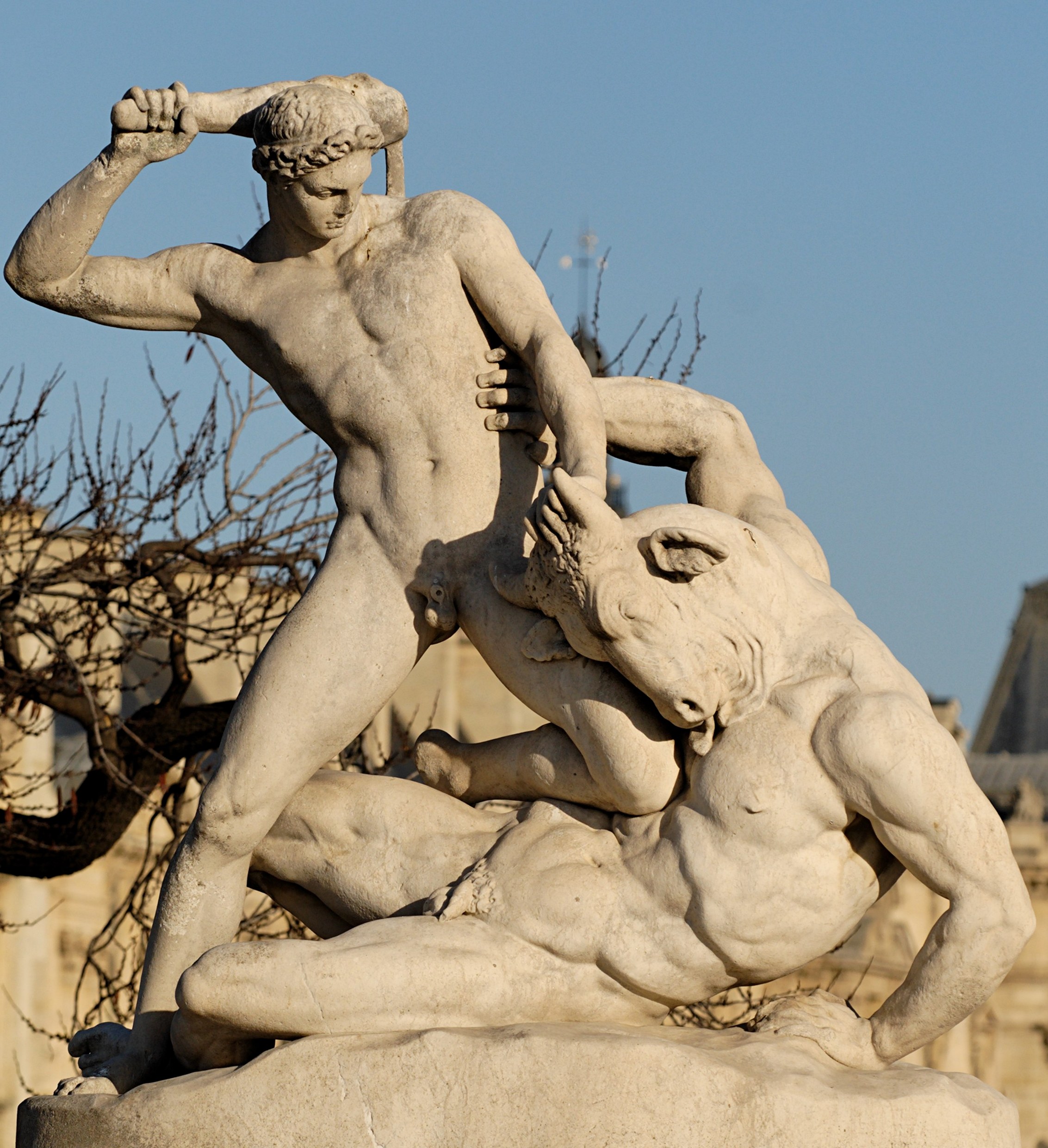
A white marble statue of a nude, laurel-crowned Theseus lunging forward with a club raised overhead in one hand, gripping the horned head of the bull-headed Minotaur with the other as the beast collapses beneath him over a fallen youth, set against a soft-focus ground of bare trees and pale stonework.
Greek

Theseus, Hero of Athens

A prince who chose the killers' road, unwound a thread through the dark to end a monster, and forgot a single sail. The founder Athens made in its own image, remembered for what he built and what he abandoned.

6 minPlutarch
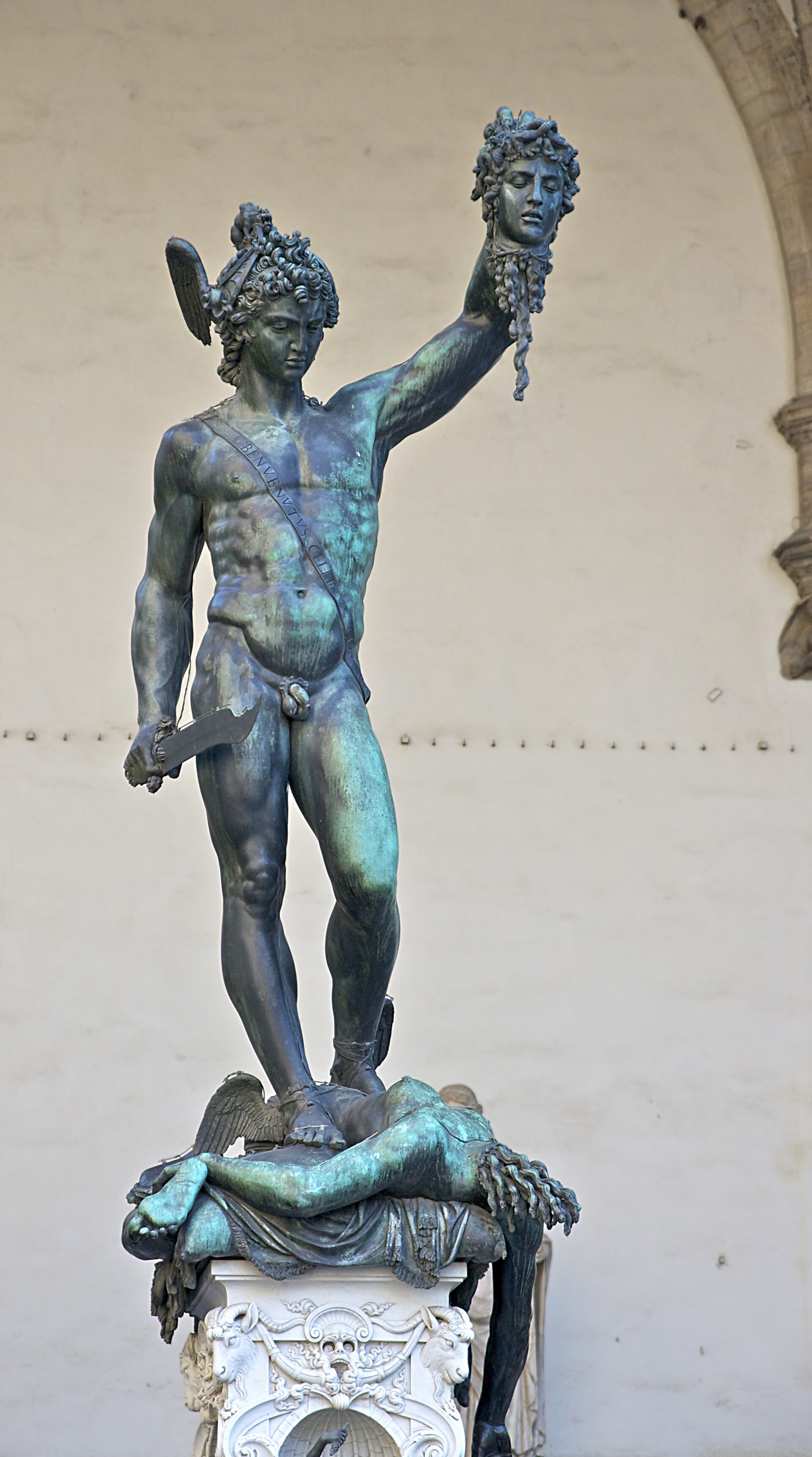
A nude young hero in a winged cap holds aloft the severed, snake-haired head of Medusa in his raised left hand and a curved sickle in his lowered right, his own gaze cast down and away from the trophy; the Gorgon's decapitated body slumps beneath his feet on an ornate pedestal against a plain pale wall — Benvenuto Cellini's bronze Perseus with the Head of Medusa in the Loggia dei Lanzi, Florence.
Greek

Perseus, Slayer of Medusa

Locked in a bronze cell, cast to sea in a chest, sent for a head no man could look at and live. The hero who won by never looking, and killed his grandfather by accident.

6 minPseudo-Apollodorus
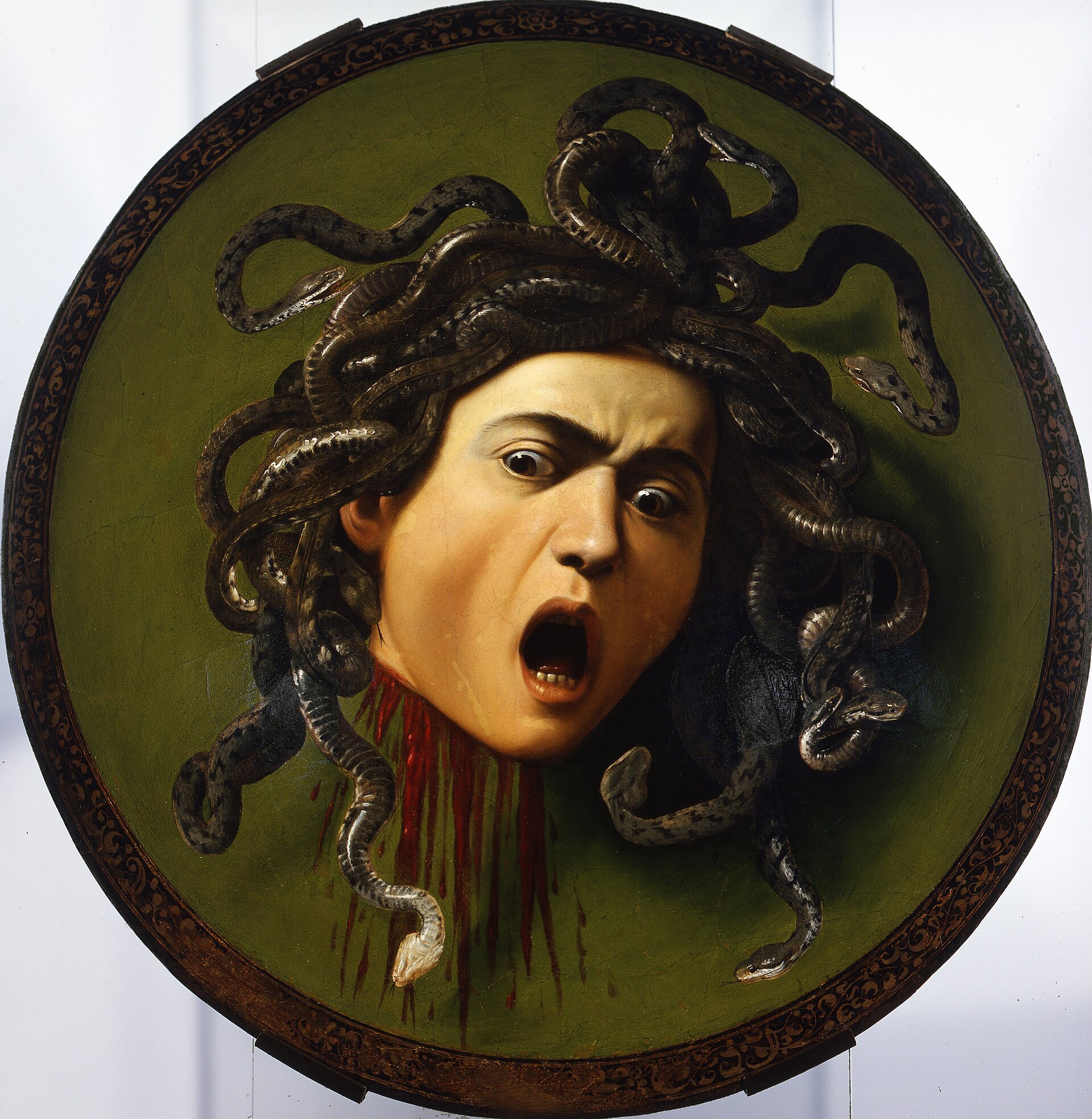
A severed, snake-haired head with wide staring eyes and mouth open in a scream, blood streaming from the neck, dark serpents writhing outward from the scalp against a green convex ground ringed by a gilt border — Caravaggio's Medusa, painted on a ceremonial parade shield, showing the Gorgon's face in the instant after decapitation.
Greek

Medusa and the Gorgons

A face no one could look at and live, and a hero who beat it by refusing to look. The only mortal monster in a family of immortal ones, killed in her sleep.

5 minHesiod
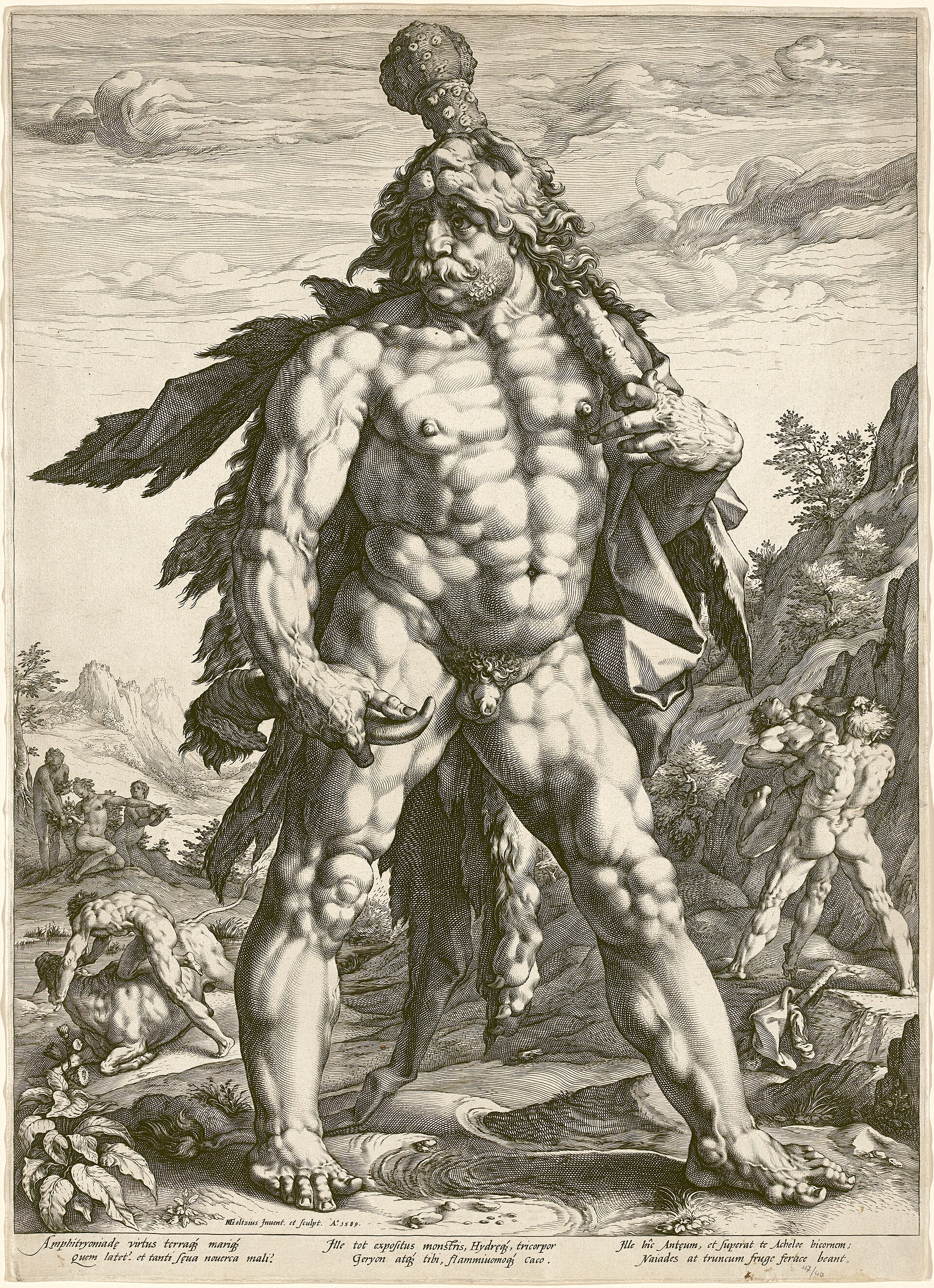
An engraving of a colossal, heavily muscled Hercules standing frontally, the Nemean lion-skin worn as a hood over his head and draped down his left side, the knotted olive-wood club resting over his right shoulder; small background vignettes show his combats with Antaeus, Cacus and Achelous in a classical landscape.
Greek

Heracles, the Greatest Hero

The strongman son of Zeus strangled serpents in his cradle and cleaned the world of monsters, but the labour that made him a god began in the ruin of his own house.

6 minPseudo-Apollodorus
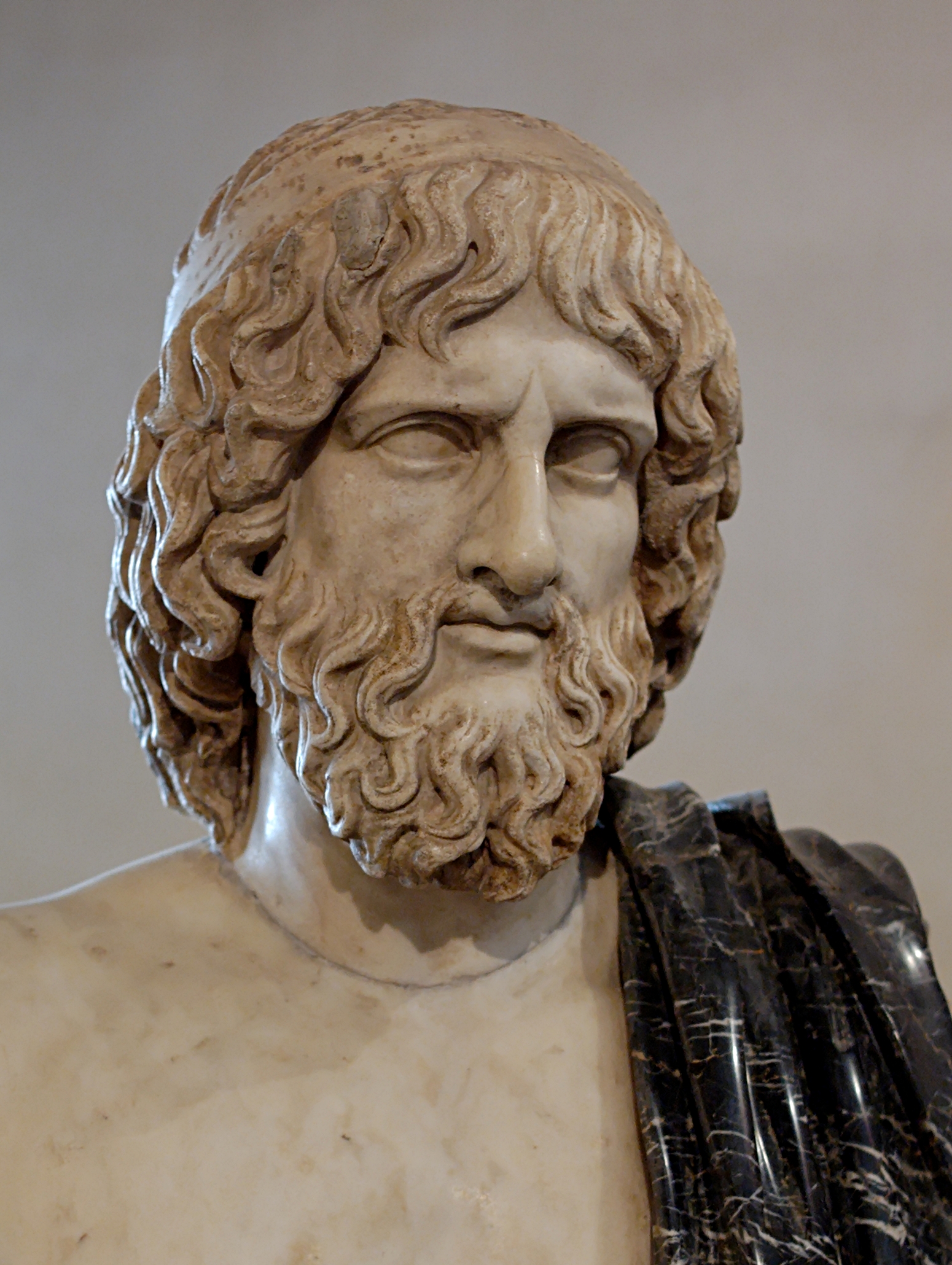
A marble bust of Hades — a mature, heavy-bearded god with thick wavy hair falling to the shoulders, deep-set blank eyes and a furrowed, stern brow, gazing off to the side. A dark near-black marble mantle (a modern restoration) is draped over his right shoulder, set against a plain grey ground.
Greek

Hades, Lord of the Dead

He drew the darkness by lot, not by choice, and the Greeks feared his name so much they called him the Rich One instead.

5 minHesiod
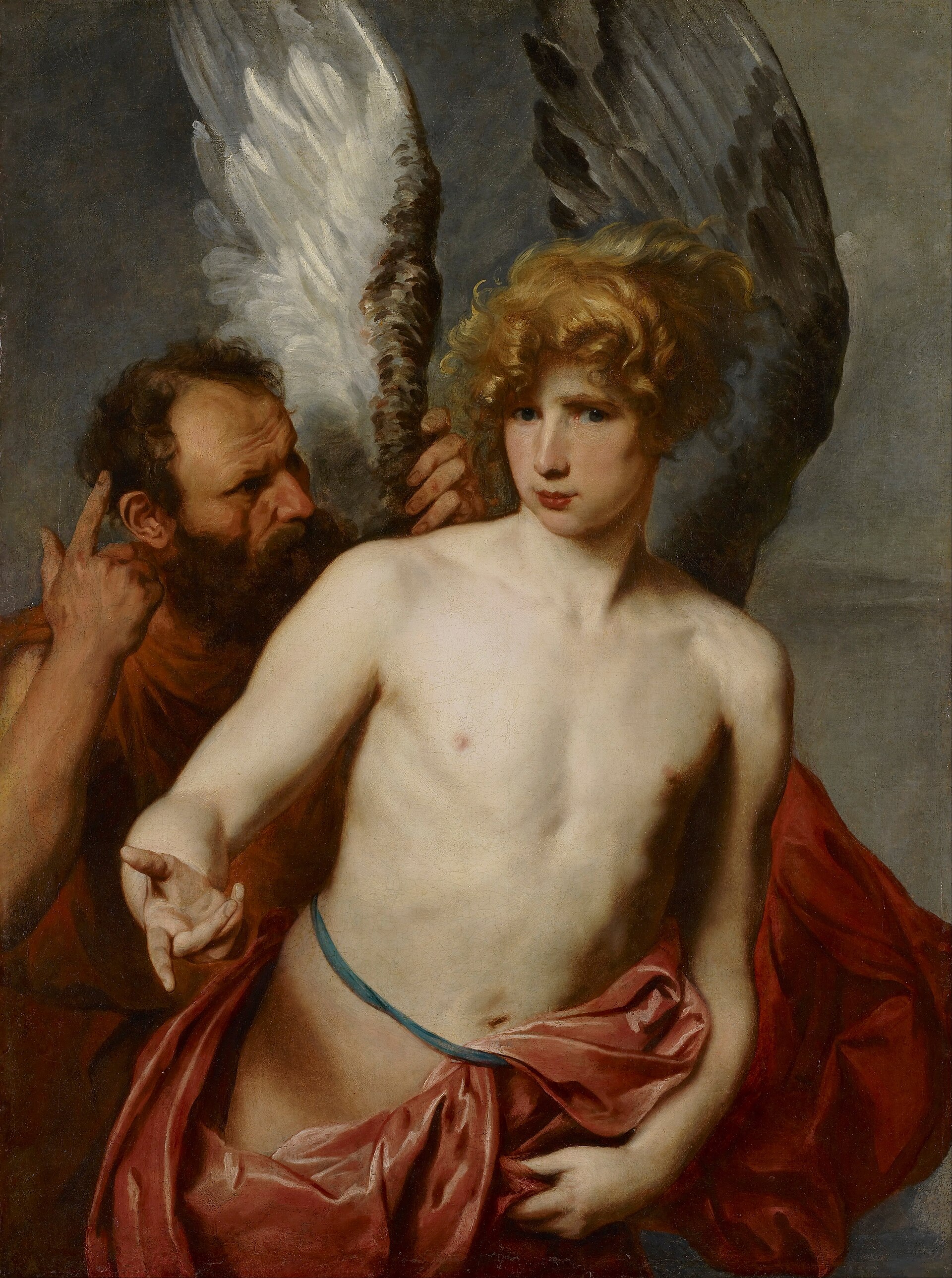
A Baroque painting of Daedalus and Icarus. The aged, balding, grey-bearded Daedalus stands behind his son in a russet-orange robe, one hand steadying a great feathered wing (one pinion pale, one dark) at the boy's shoulder while the other hand rises with a raised, admonishing finger, as though giving a warning. In front of him the youthful, bare-torsoed Icarus, with tousled golden hair and a red drape falling from his hips, gazes out past the viewer, one arm extended. The background is a plain, shadowed studio wall.
Greek

Daedalus and Icarus

A caged inventor reasons that if the sea and the land are watched, the sky at least lies open. He builds his son a pair of wings, and gives him one rule to keep him alive.

6 minOvid
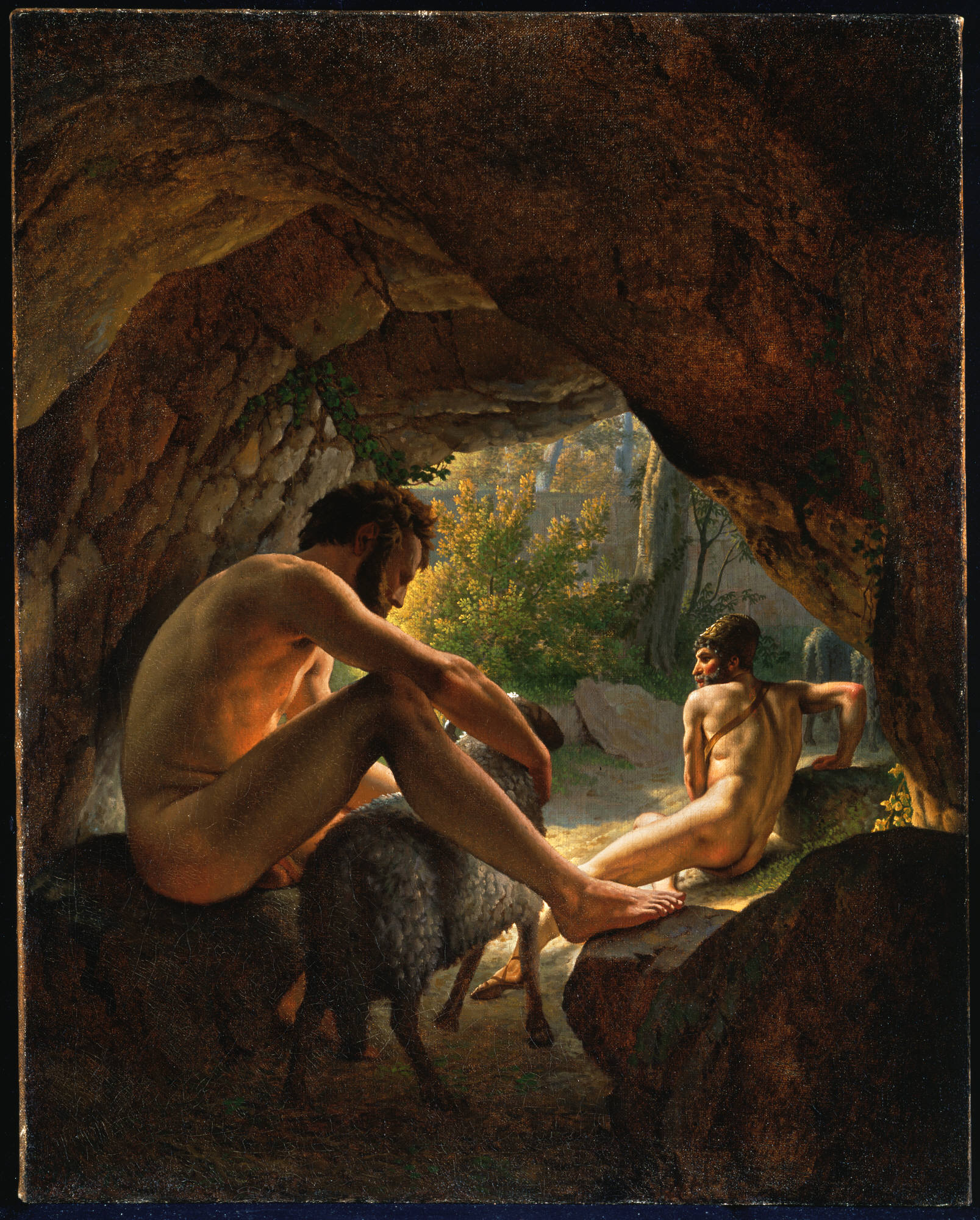
A dim rock cave opening onto a sunlit autumn wood. Two nude, bearded men creep out beneath the bellies of Polyphemus's heavy-fleeced rams: one at left, half in shadow, clings low against a dark ram's underside with his legs drawn up, watching warily; a second, already at the bright mouth of the cave at right, twists his head back over his shoulder as he clears the entrance. The blinded giant is not shown — only his flock and the escaping men — so the whole picture is the ram-escape held at the knife-edge instant before the open air, tense and hushed in Eckersberg's cool Neoclassical light.
Greek

Odysseus and the Cyclops

He beat a giant with a lie and a sharpened stake, then threw it all away for the pleasure of hearing the monster learn his name.

7 minHomer
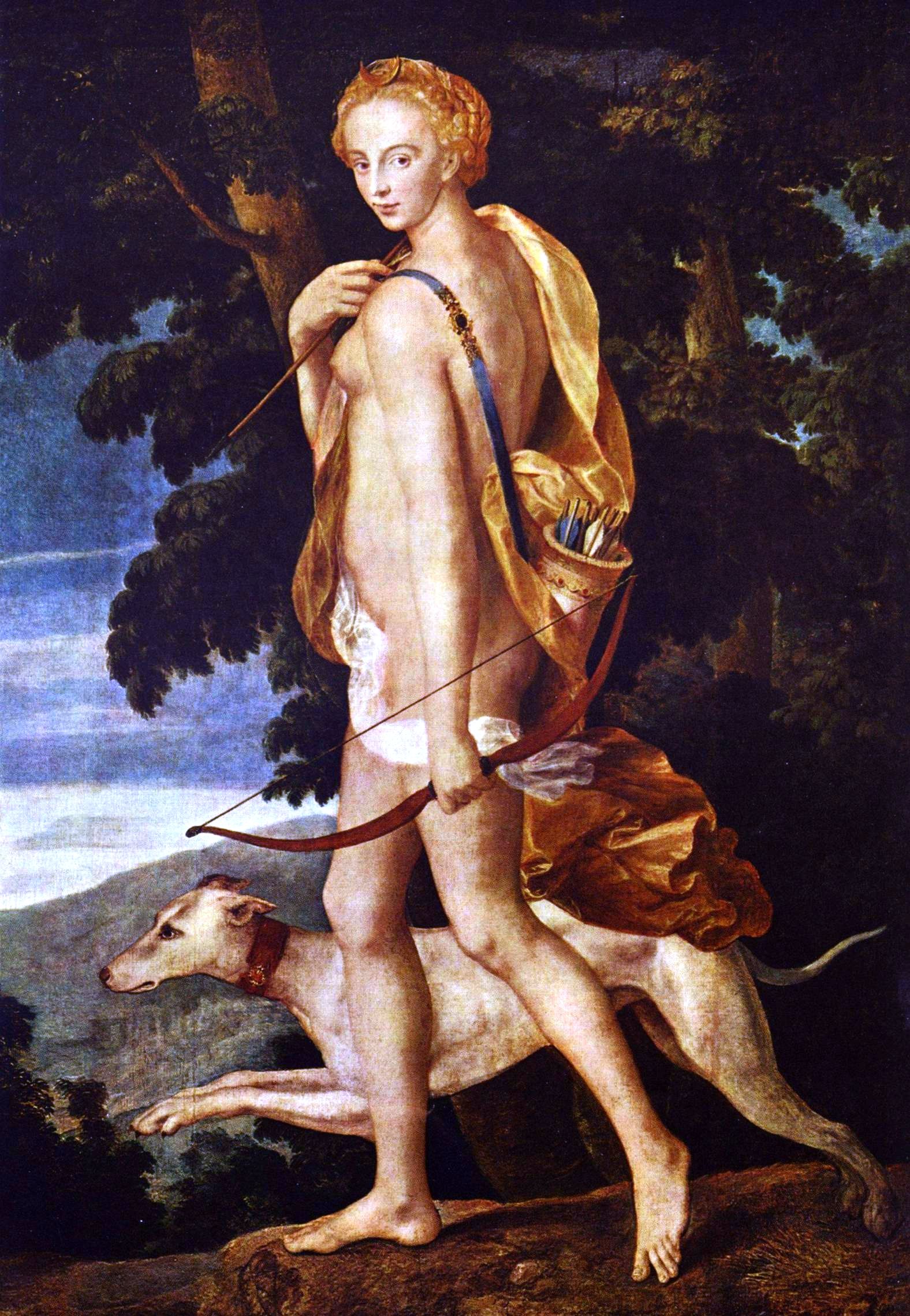
Diana the huntress striding through a dark wood, a gold mantle slipping from her shoulders, reaching back to draw a white-fletched arrow from the quiver at her side while a red recurve bow hangs in her lowered hand. A lean white hound courses at her feet, and a lake glimmers through the trees behind her.
Greek

Artemis, the Huntress

The small child who climbed onto her father's knee and asked for a bow, eternal maidenhood and all the mountains in the world, then took them.

5 minHomeric Hymn 27
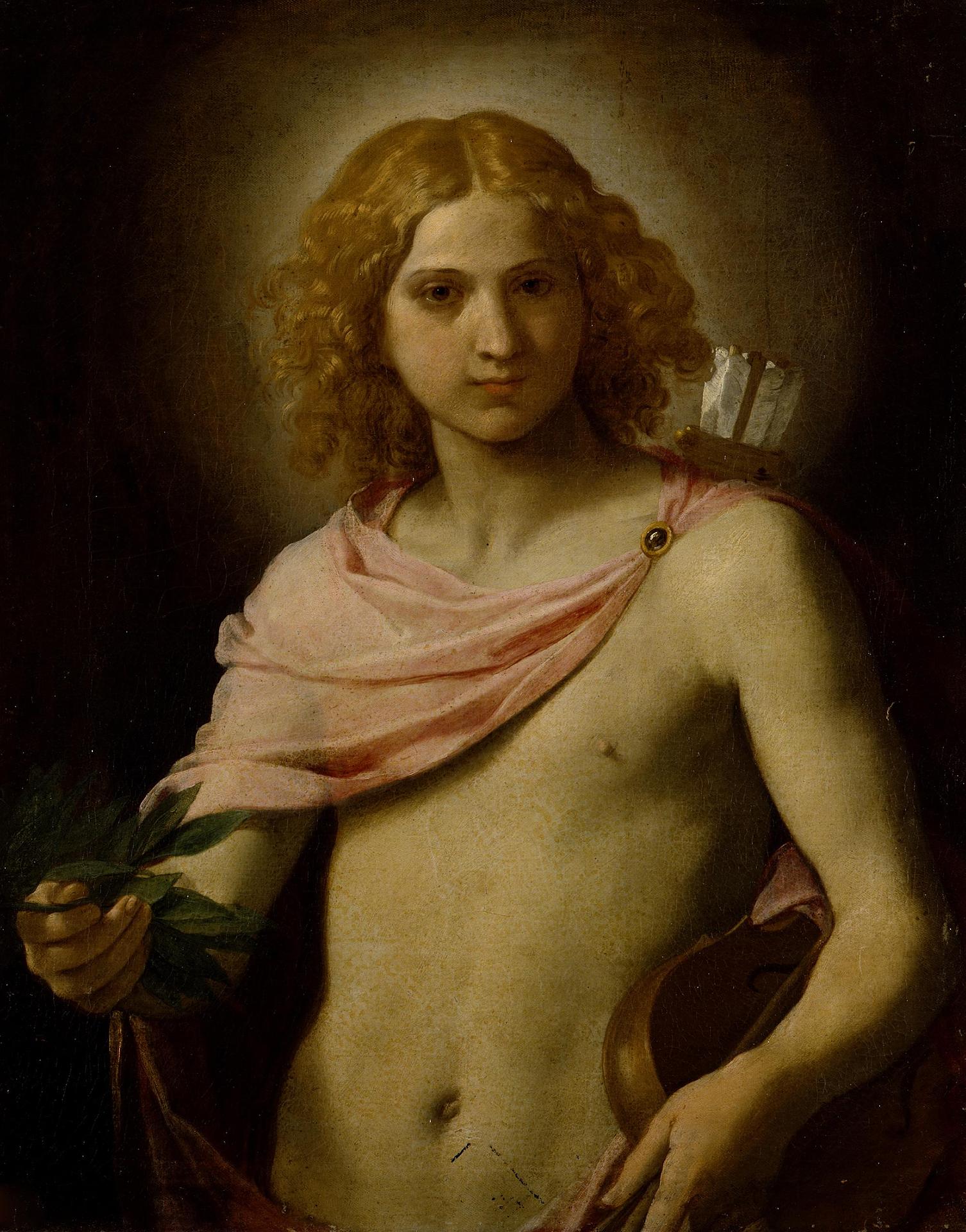
The young Apollo, unbearded and golden-curled, a soft halo of light behind his head, a rose mantle slipping from one shoulder. He holds a laurel branch in his right hand; a lyre rests at his left side and the white-fletched arrows of his quiver show above his shoulder.
Greek

Apollo, God of Light and Prophecy

The newborn who burst his swaddling bands to claim the lyre, the bow and the truth of Zeus, then killed a dragon to found the oracle that spoke for him.

5 minHomeric Hymn 3