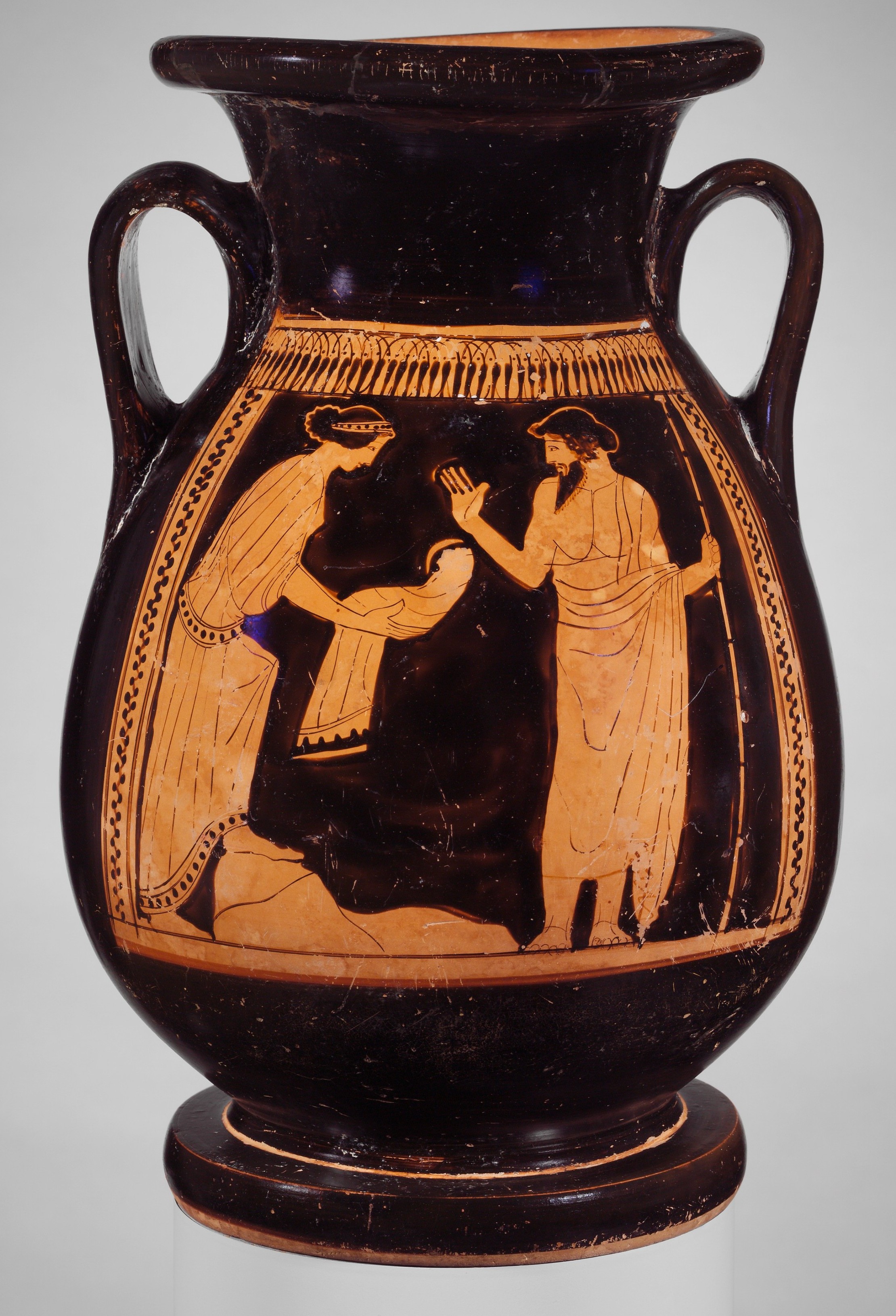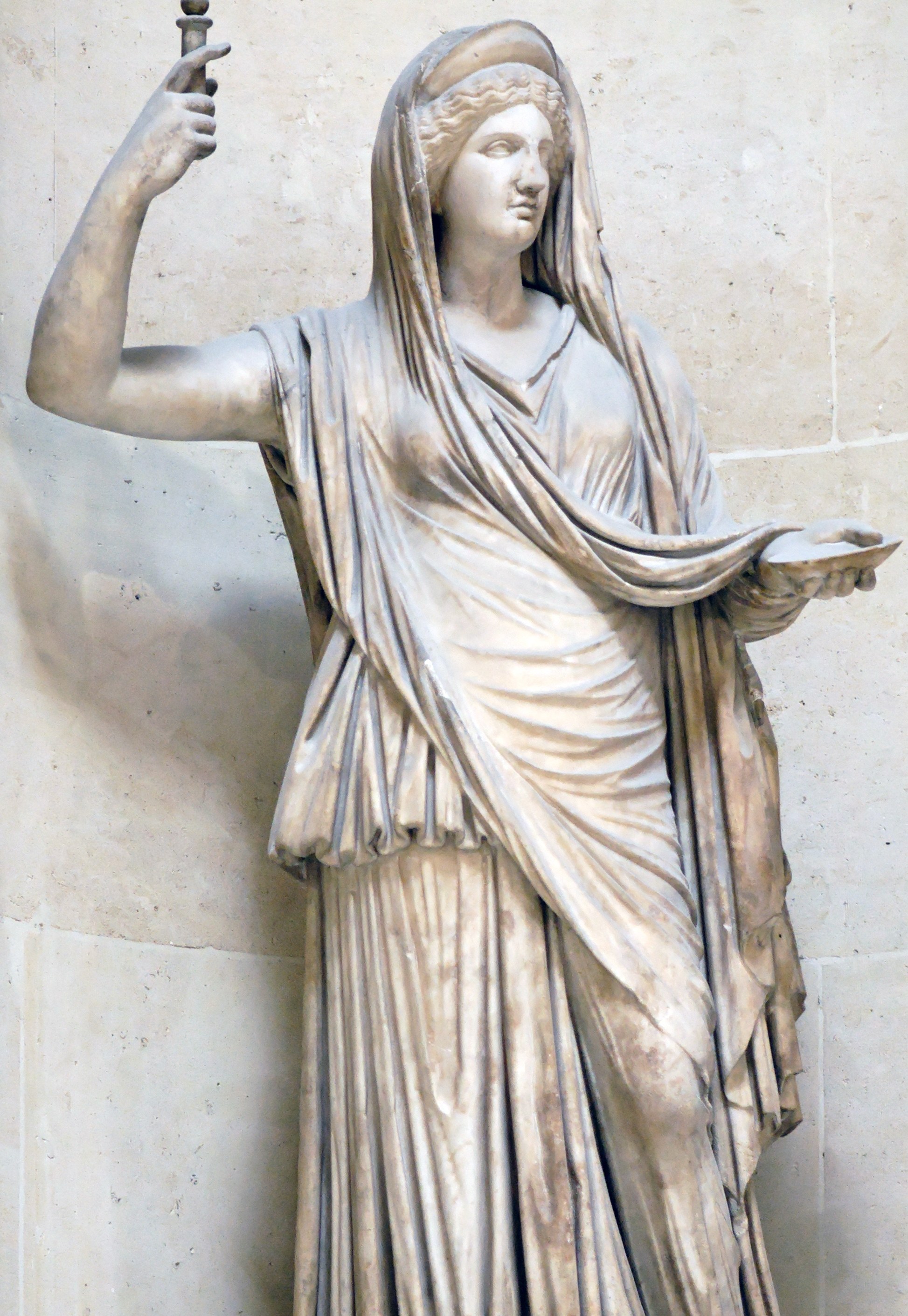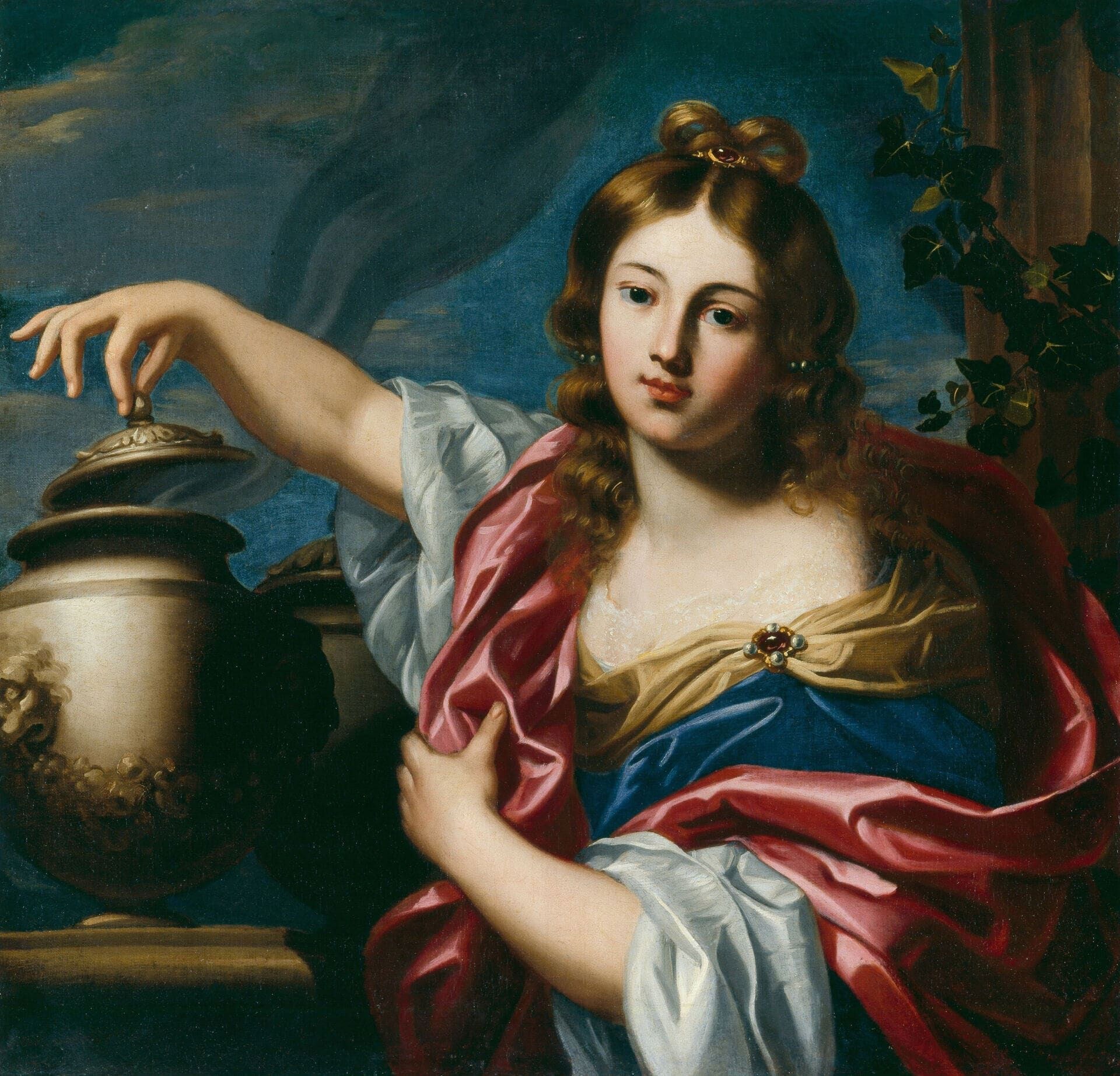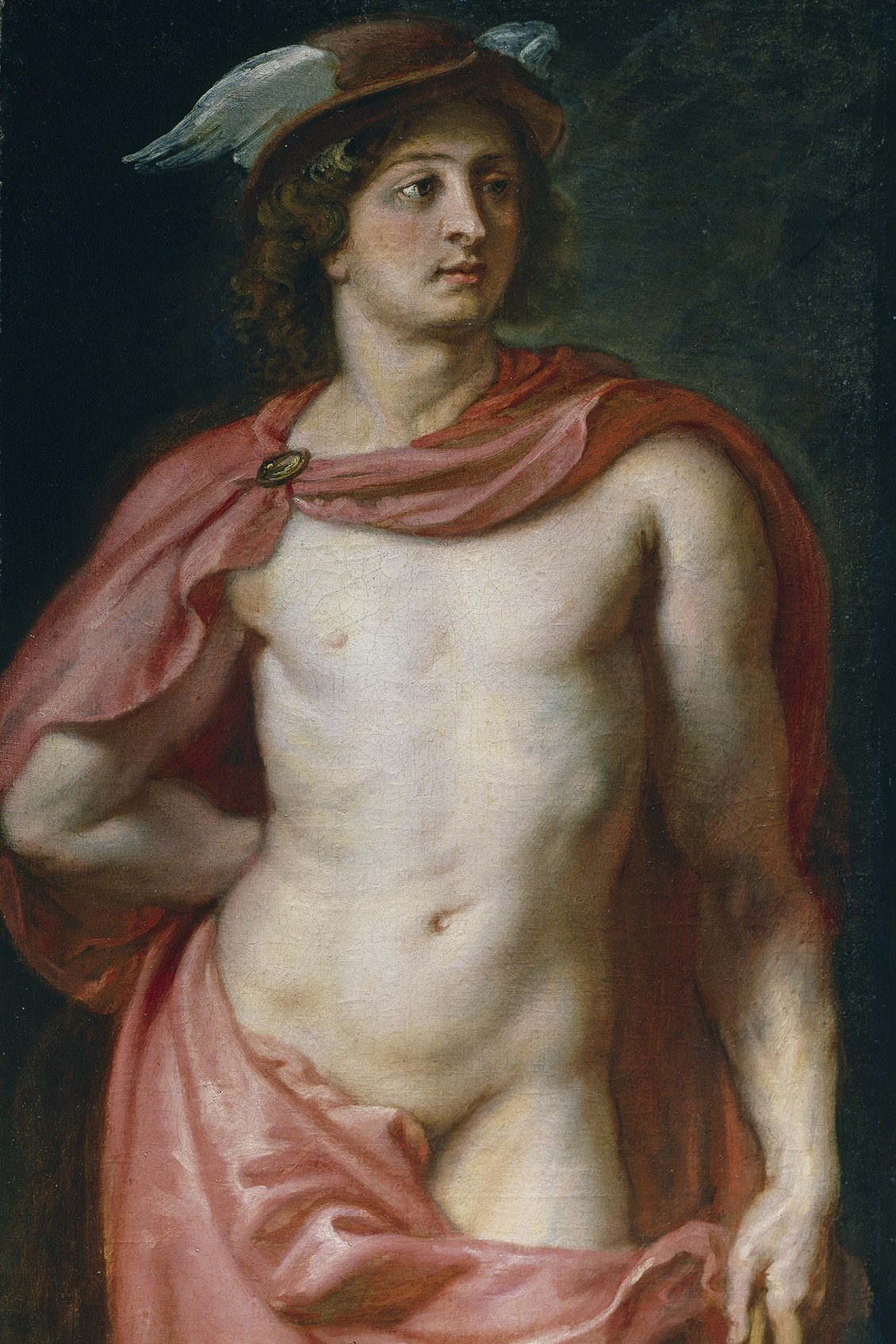
Two serpents came over the threshold in the dark and slid towards the cradle, and the baby in it took one in each fist and throttled them. His twin brother shrieked and thrashed at the far end of the crib; Alcmene screamed for a lamp. When the light came, the infant Heracles was holding up two dead snakes like a rattle. It is the first thing the sources agree he ever did, and it tells you everything: the strength was there before the man was, a gift he did not ask for and could not put down. Hera had sent the snakes. She would keep sending them, in one shape or another, for the rest of his life.
The grudge that began early
The grudge began before his birth. Zeus had lain with Alcmene, wife of the Theban general Amphitryon, wearing her husband’s own face while the real Amphitryon was away at war; Diodorus says the god stretched that night to three times its length, so great a hero did he mean to father. On the day the child was due, Zeus boasted that a descendant of Perseus born that day would rule over his neighbours.
Hera made him swear it, then held Heracles back in the womb and hurried the birth of his cousin Eurystheus instead. So the strongest man alive was bound, by his own father’s careless oath, to take orders from a lesser one. Even the name is Hera’s mark. He was born Alcides, of the line of Alcaeus, and renamed Heracles, glory of Hera,
on the advice of Delphi: famed through the very goddess who hated him.
The lyre that killed his teacher
He grew violent as easily as he grew strong. Struck by his music teacher Linus, the boy killed the man with the lyre. Grown, he freed Thebes from the tribute it paid to Erginus of the Minyans and won Megara, daughter of King Creon, as his wife. And here the sources part ways over the darkest thing he ever did. In ApollodorusThe unidentified compiler of the Library, a systematic prose summary of the myths written too late to be the work of the Athenian scholar whose name it carries, and so commonly cited as Pseudo-Apollodorus., Hera drives him mad and he throws his own children by Megara into a fire, and it is to purge that blood-guilt that Delphi sends him to serve Eurystheus and perform the labours: the horror comes first, and the labours are its penance.
Euripides, staging the tragedy a full act of Greek theatre later, reverses it. His Heracles comes home in triumph, the labours already behind him, and it is then, at the peak of his glory, that the madness takes him and he butchers his family in his own hall. Both are ancient; neither is the true
order. One makes the labours an expiation, the other makes them a cruel irony. The myth refuses to choose, and so will we.
The twelve, and the order of them
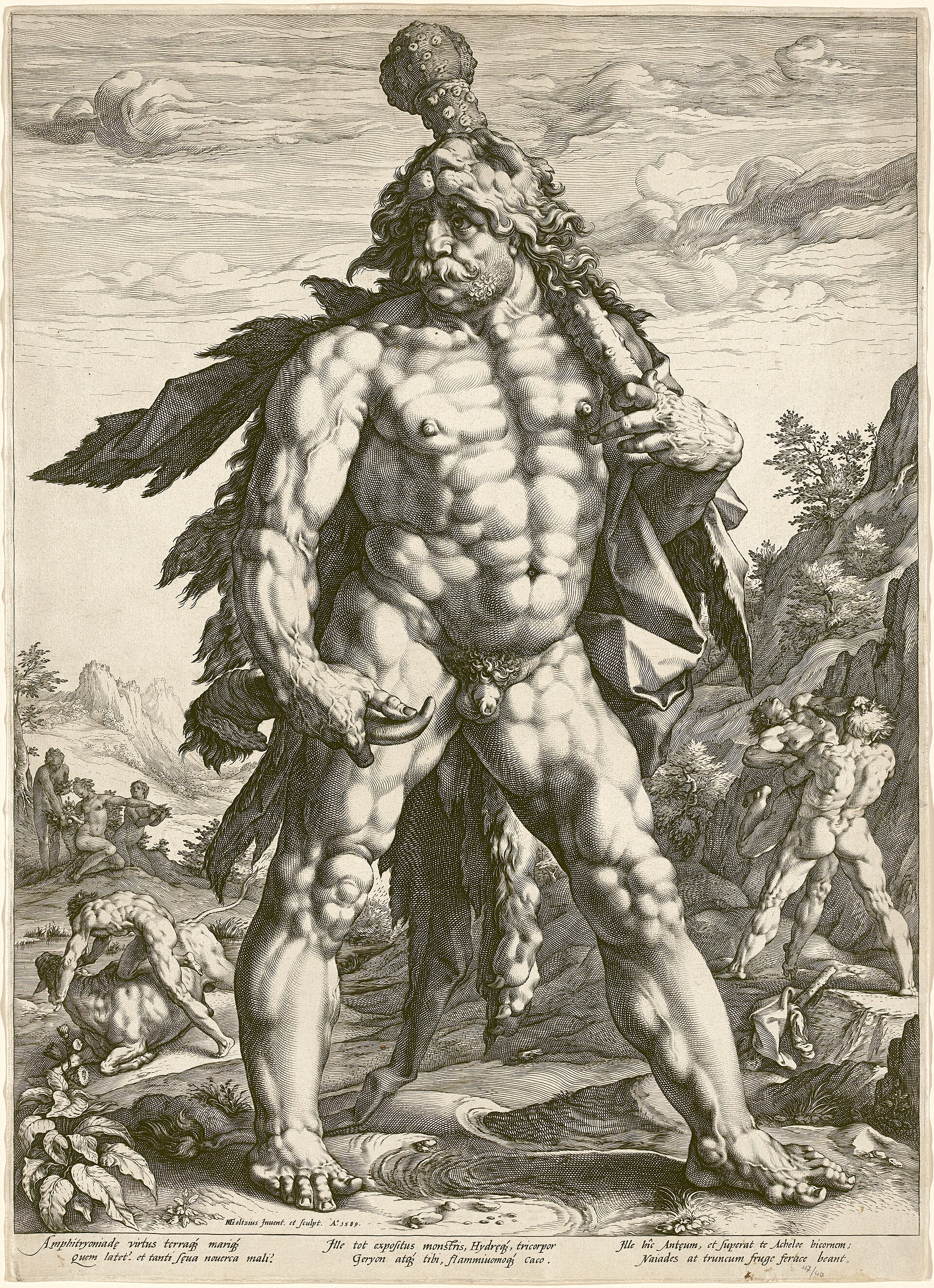
The labours themselves are twelve, though the number was fixed long before the contents settled; the sculpted metopes of the Temple of Zeus at Olympia anchor the canonical set, and the poets shuffle the order freely. Apollodorus lists them so. He strangles the Nemean Lion, whose hide no iron can pierce, and skins it with its own claws, wearing the pelt ever after. He cuts down the heads of the Lernaean Hydra while his nephew Iolaus sears each stump so no two grow back, buries the one immortal head under a rock, and dips his arrows in its venom, a poison that will one day come back for him. He runs down the golden-horned Ceryneian Hind for a year and takes it alive, then hauls the Erymanthian Boar back on his shoulders to a rattled Eurystheus.
He cleans the impossible filth of the stables of Augeas in a single day by breaking a wall and turning two rivers through it. He rattles Athena’s bronze castanets to flush the Stymphalian Birds; masters the Cretan Bull; steals the man-eating Mares of Diomedes and the war-belt of the Amazon queen Hippolyte. He crosses the western Ocean in the golden cup of the Sun to lift the cattle of three-bodied Geryon, and plants the Pillars of Heracles at the edge of the world. He holds up the whole sky while Atlas fetches the golden apples of the HesperidesNymphs of the far west who kept the garden of golden apples, guarded with them by the sleepless dragon Ladon, and whose number and parentage the sources give differently., then tricks the Titan into taking the weight back. And last, the deadliest, he goes down living into the land of the dead and drags the three-headed hound Cerberus up into the daylight with his bare hands, hauling it before Eurystheus, who is so terrified that he scrambles into a great bronze jar to hide.
Antaeus lifted off the earth
Twelve was not the end of him. He sacked Troy against the cheating Laomedon, shot the eagle that gnawed Prometheus and set the Titan free, wrestled the giant Antaeus off the earth that fed him, stood with the gods in their war against the Giants because a mortal hand was needed to finish the kill, and served a term as the slave of Omphale, queen of Lydia, dressed in women’s clothes in the mocking versions. The ancient distinction matters: these are parerga, deeds done alongside, not the twelve labours proper, and the sources are careful not to let the whole roaring career collapse into one list.
The robe that would not come off
The end came, as Hera’s blows always came, disguised as a gift. Heracles won his second wife Deianira by wrestling the river-god Achelous, and carrying her home he shot the centaur Nessus for laying hands on her. Dying, Nessus told her to keep his blood as a love-charm. Years later, fearing he loved another woman, Iole, she smeared the charm on a robe and sent it to him, and the Hydra’s venom still living in that centaur’s blood ate into his flesh like fire.
In Sophocles she does it out of love and despair, not malice, and kills herself when she understands. In agony that would not stop, Heracles built a pyre on Mount Oeta, spread his lion-skin over the wood, leaned on his club, and gave his bow and poisoned arrows to Poeas for lighting it. A thundercloud took him up. His mortal part burned away on the mountain, and what was left of him went to Olympus, reconciled at last with Hera and married to her daughter Hebe, the goddess of youth.
Even that ending splits. Hesiod, Diodorus and Apollodorus give the full apotheosis, the strongman made a god. But Homer, in the older image, has Odysseus meet the shade of Heracles glowering among the dead in the Underworld, bow still drawn, before the poem adds, awkwardly, that he himself
feasts among the immortals with Hebe. Many readers ancient and modern take that second line for a later stitch, sewing the newer heaven onto the older ghost. It is the fitting last variant for such a man: too large for one fate, remembered as both a corpse in the dark and a god at the feast, and never only one.
He was born the strongest thing alive and spent that strength cleaning the world of its monsters, but the labour no strength could finish was the one inside his own house. The serpents in the cradle he could throttle. The madness Hera sent into his hands he could only survive, and pay for.
- Pseudo-Apollodorus, Bibliotheca 2.4.5–2.7.7 (1st–2nd c. CE)the fullest connected narrative. The delayed birth engineered by Hera, the serpents in the cradle, the killing of Linus, the madness and murder of the children before the labours, the twelve labours in their canonical listed order, the later exploits, the servitude to Omphale, the winning of Deianira, and the death and apotheosis. Traditionally ascribed to Apollodorus of Athens, but the surviving handbook is a later anonymous compilation.
- Euripides, Heracles (Herakles Mainomenos) (5th c. BCE)the tragedy that places the madness and child-murder after the labours, on the hero’s triumphant return home, and adds the killing of Lycus and the friendship with Theseus. The deliberate divergence from Apollodorus on the sequence of the crime.
- Diodorus Siculus, Bibliotheca Historica 4.8–4.39 (1st c. BCE)the rationalised, euhemerising life. The
triple night
of the begetting (4.9), an alternate ordering of the labours, the freeing of Prometheus and the wrestling of Antaeus, the founding of the Olympic Games, and the death and deification (4.38–39), including the explicitmortal part burns, immortal part ascends
reading. - Sophocles, Trachiniae (Women of Trachis) (5th c. BCE)the definitive treatment of the death: Deianira acting in love and desperation rather than malice, the charm of the dying Nessus, the poisoned robe that clings and burns, and the pyre on Mount Oeta.
- Homer, Iliad 19.95–133 and Odyssey 11.601–627the earliest epic references. Hera delays the birth through the goddess Ate so that Eurystheus is born first (Iliad), and the meeting with the shade of Heracles in Hades alongside the disputed apotheosis line (Odyssey), the key theological variant on his afterlife.
- Hesiod, Theogony 950–955 and Shield of Heracles 27–56the marriage to Hebe and the apotheosis (Theogony), and the begetting on Alcmene by Zeus in Amphitryon’s likeness (Shield).
- Ovid, Metamorphoses 9.1–272 (Roman, 1st c. CE)the vivid sensory account of the wrestling-match with Achelous and the horn that becomes the cornucopia, the Nessus episode, the burning robe, and the apotheosis with the mortal-and-immortal-part rationalisation. Later and Italian, distinct from the Greek core.