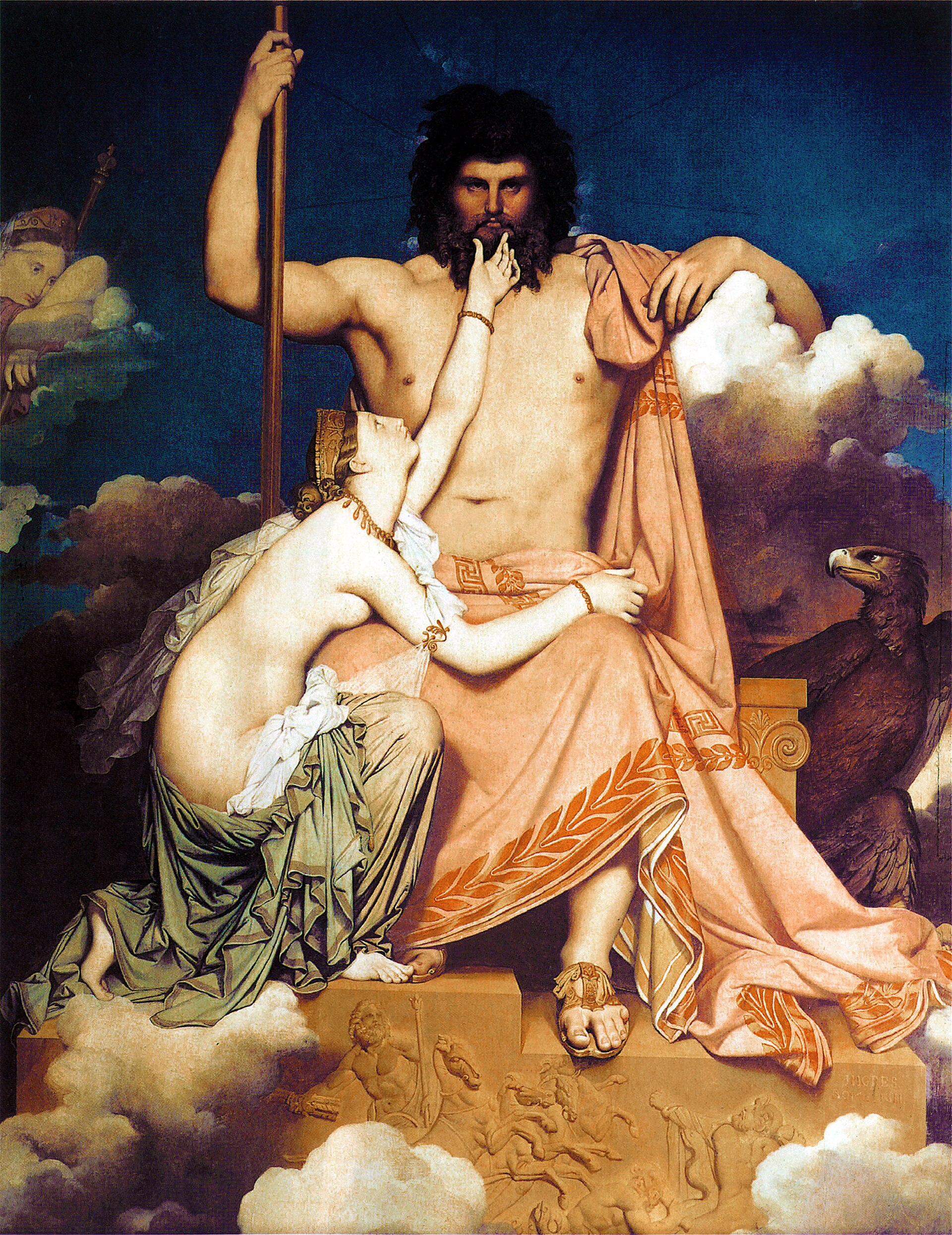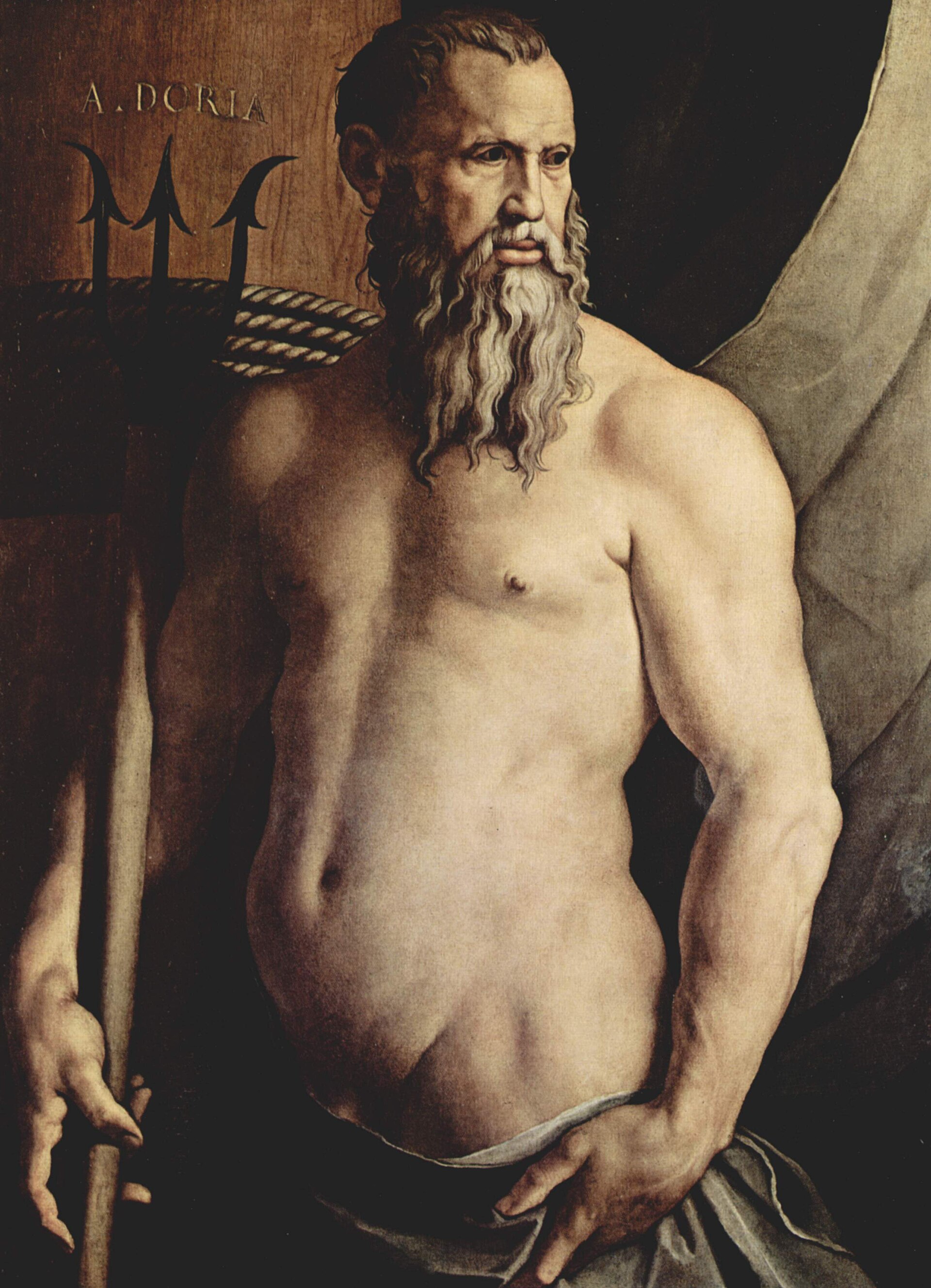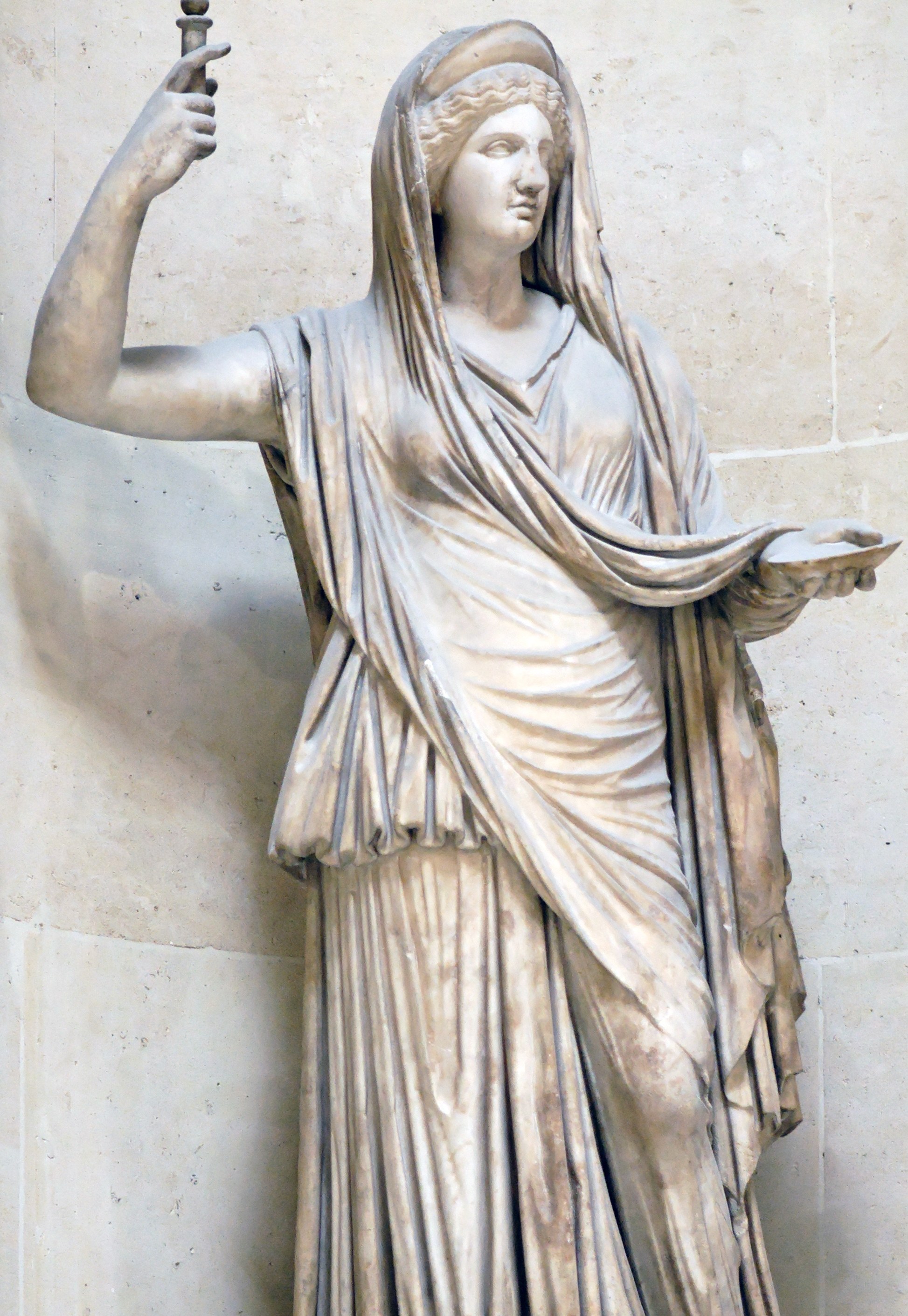
A father sat waiting for his children to be born so that he could eat them. Kronos had heard the prophecy, that one of his own sons would strip him of his kingly office as he had once stripped his father, and he found a straightforward remedy. Each time Rhea bore a child, he took the newborn as it came forth from the womb to its mother’s knees and swallowed it whole. Hestia went down first, then Demeter, then gold-shod Hera, then strong Hades, then the loud-crashing Earth-Shaker Poseidon, and each of them lived on inside their father in the dark. This is where the ruling family of Olympus begins, in Hesiod’s Theogony: not on a bright mountaintop but in the belly of a terrified Titan, a whole generation of gods held prisoner before any of them had drawn breath in the open air.
The six who were swallowed
The six who would become the core of the household are all here at the start, and Hesiod names them in a single breath: three sisters and three brothers, Hestia, Demeter and Hera, Hades and Poseidon and wise Zeus. They are siblings before they are anything else, and that fact runs through everything that follows. When the youngest, Zeus, was born, Rhea hid him away in Crete and handed Kronos a great stone wrapped in swaddling clothes, which he took in his hands and thrust down into his belly, never suspecting he had swallowed a rock instead of a god.
The infant grew up in secret, came back, and forced his father to bring the others up again. The stone came first, disgorged before the children, and Zeus set it up at Pytho beneath the glens of Parnassus to be a sign and a marvel to mortal men. A visitor to Delphi could go and look at it: a physical relic of the family’s founding trauma, on display.
There is a paradox buried in that rescue, and ancient readers noticed it. Hestia was swallowed first and brought up last, which makes the eldest-born sister, by order of disgorging, effectively the youngest of the six. The family’s birth order was reversed by the manner of its deliverance, and the sense that this household runs on inversions and reversals never quite leaves it.
The act that made a dynasty
What turns a rescued sibling group into a ruling family is a single constitutional act. After Kronos was defeated, Zeus distributed fairly to the immortals their portions and declared their privileges. The Greek word is timai, honours: the portions of standing and the specific dignities that go with them. Before this moment the gods are simply kin. After it they are a government, with a sovereign at the head and every member holding an assigned office. The family and the state are the same institution, and Zeus sits at the top of both.
One wife after another
The second generation grows out of Zeus’s own bed, and Hesiod lays out his unions almost as a genealogical list, one wife after another. Metis was first, swallowed while pregnant so that Zeus could bear Athena from his own head. Then Themis, mother of the Seasons and the Fates; Eurynome, mother of the Graces; then Zeus turned to his own sister Demeter and fathered Persephone, whom Hades would later carry off with Zeus’s own consent.
Mnemosyne bore the nine Muses; Leto bore Apollo and Artemis; and last of all Zeus took Hera, his blooming wife, who bore Hebe and Ares and Eileithyia. The list is worth reading slowly, because it makes plain something later tellings tend to soften. Zeus marries his sister Hera and fathers children on his sister Demeter. Sibling marriage is not an embarrassing accident in this family; it is structural, written into the source without apology, the way the ruling line keeps its power inside the household.
The parthenogenesis cuts both ways. Zeus produces Athena from his head with no mother present at the birth. Hera, in answer, bears Hephaestus entirely on her own, without union with Zeus, out of anger at her husband and rivalry with him. Even the family’s miraculous births are moves in a marital quarrel.
Rooms, furniture, and a pecking order
Now step inside the house, because the oldest poets show it to us as an actual household with rooms and furniture and a pecking order. When Apollo strides into the hall of Zeus bending his bright bow, the gods tremble and spring up from their seats.
His mother Leto crosses to him, unstrings the bow and closes the quiver, hangs his archery on a golden peg against a pillar of his father’s house, and leads him to a seat; and the Father gives him nectar in a golden cup, welcoming his dear son. It is a domestic scene almost before it is a divine one: a young man comes home, an anxious mother takes his weapons and settles him, and the head of the house pours him a drink. The awe and the family warmth sit in the same room.
The fullest picture of the household convened comes in the Iliad, when Zeus wants every god assembled and sends Themis to summon them to his house. They all come, every river and every nymph of the copses and the springs and the grassy meadows, all save Oceanus alone. They take their places within the polished colonnades that Hephaestus, the family’s own craftsman-son, had built for father Zeus with cunning skill. Even Poseidon leaves the sea, comes forth to join their company, and sits down in the midst. The palace has a builder among the children, a throne room, a seating order, and a summons that reaches the whole extended kin. This is a dynasty holding court.
And like any court, it runs on rivalry as much as on ceremony. The Hymn to Apollo remembers that when Leto was in labour, Hera stayed away in the halls of Zeus out of jealousy and deliberately detained the birth-goddess Eileithyia, until Iris was sent to fetch her with a bribe: a great necklace strung with golden threads, nine cubits long. The Iliad shows the softer face of the same closeness.
When Aphrodite is wounded by a mortal and flees weeping to her mother Dione’s knees, Dione gathers her up and comforts her, saying that many of them who dwell on Olympus have suffered at the hands of men. A family that schemes against one another’s children in one poem consoles its own in another. Both are true, because both are what families are.
No ancient list of twelve
A word of caution belongs at the centre of this, not tucked away at the end. There is no single ancient text that lists the Twelve Olympians as a fixed roster. The number twelve is real and old in worship: Thucydides records that the Altar of the Twelve Gods stood in the Athenian agora, dedicated by Pisistratus the younger, grandson of the famous tyrant, during his archonship. But Thucydides never names the twelve, and no early source does. The membership drifts, and even the count varies by place and period. The most notorious variation swaps the hearth-goddess Hestia for the wine-god Dionysus in the roster, and the tidy tale that Hestia graciously gave up her seat is a late accretion with no early warrant behind it.
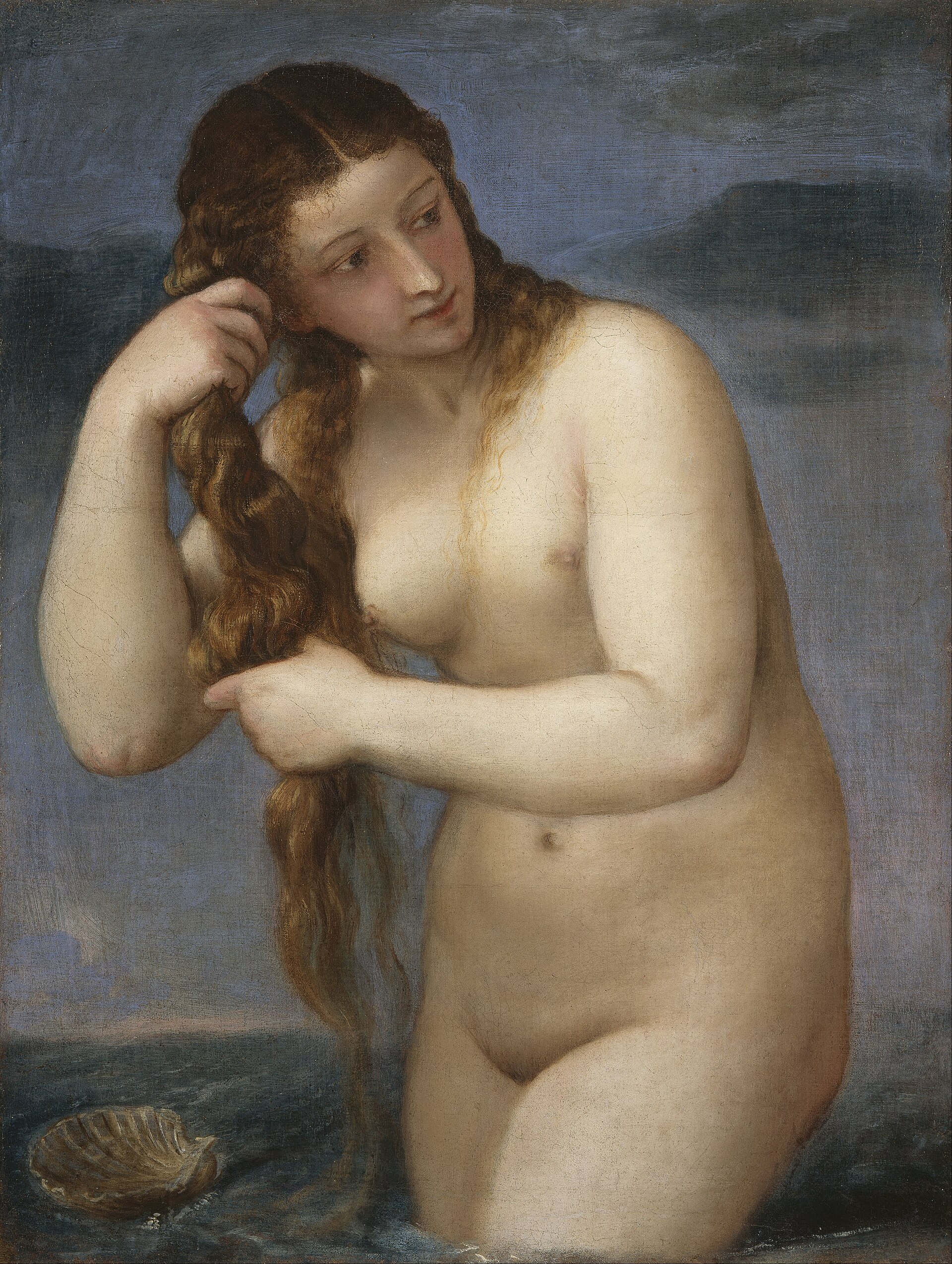
The family’s own foundations are contested too. Aphrodite is either older than Zeus, born from the sea-foam that gathered around the severed flesh of Heaven, or she is Zeus’s own daughter by Dione, a second-generation Olympian; the two traditions cannot both be true, and they place her on entirely different branches of the tree. Hephaestus is Hera’s son alone in Hesiod and the son of Zeus and Hera together in Homer. The right way to hold the Twelve is not as a cast list to be memorised but as an idea: a ruling college, a divine household with a head and a hierarchy, whose exact membership the Greeks themselves never fixed.
What survives every variant is the shape of the thing. A swallowed generation clawed back into the light, a sovereign who parcels out honours to his kin, sisters married to brothers to keep the line whole, sons who build the palace and daughters detained in childbirth by a jealous queen. Strip away the argument over who counts as the twelfth, and the same household stands underneath: a family that rules because it is a family, and rules the way families do, by blood, by grievance, and by the long memory of who was swallowed and who was saved.
They sat them down within the polished colonnades which for father Zeus Hephaestus had builded with cunning skill; and Poseidon came forth from the sea to join their company, and sate him in the midst.
- Hesiod, Theogony 453–506the birth of the six children of Kronos and Rhea (Hestia, Demeter, Hera, Hades, Poseidon, Zeus), Kronos’s swallowing of each newborn, the swaddled stone given in Zeus’s place, Zeus’s concealment in Crete and the later disgorging, and the setting-up of the stone at Pytho. The foundational sibling group. (Trans. Evelyn-White, Loeb 1914, via topostext.org/work/4.)
- Hesiod, Theogony 886–929Zeus’s successive consorts (Metis, Themis, Eurynome, Demeter, Mnemosyne, Leto, Hera) and their children; the birth of Athena from Zeus’s head and of Hephaestus from Hera alone, in anger, without union with Zeus. The spine of the second Olympian generation and the explicit statement of sibling marriage. (Trans. Evelyn-White, Loeb 1914, via topostext.org/work/4.)
- Hesiod, Theogony 188–206Aphrodite born from the sea-foam gathered around the severed members of Ouranos, older than Zeus’s generation (the first of her two incompatible origins). (Trans. Evelyn-White, Loeb 1914, via topostext.org/work/4.)
- Homer, Iliad XX.4–15Zeus, through Themis, summons all the gods to his house; the assembly gathers in the colonnades Hephaestus built, every river and nymph attending save Oceanus, and Poseidon comes up from the sea to sit in the midst. The single best image of the ruling household convened. (Trans. A. T. Murray, Loeb 1924, via topostext.org/work/2.)
- Homer, Iliad V.370–384Aphrodite as daughter of Dione (the second of her two origins); Dione comforting her wounded child, the gods as a family that consoles its own. (Trans. A. T. Murray, Loeb 1924, via topostext.org/work/2.)
- Homeric Hymn to Apollo 1–13, 62, 89–114the divine court’s deference as Apollo enters the hall, Leto tending him and Zeus as the welcoming Father; Leto named daughter of Coeus; Hera’s jealous detaining of Eileithyia at Apollo’s birth and the nine-cubit golden necklace sent to fetch her. (Trans. Evelyn-White, Loeb 1914, via topostext.org/work/356.)
- Thucydides, Peloponnesian War VI.54.6the Altar of the Twelve Gods in the Athenian agora, dedicated by Pisistratus the younger (son of Hippias, grandson of the tyrant) during his archonship; the cultic attestation of the Twelve as a group, without a name-list. (Trans. Crawley, via topostext.org/work/52.)