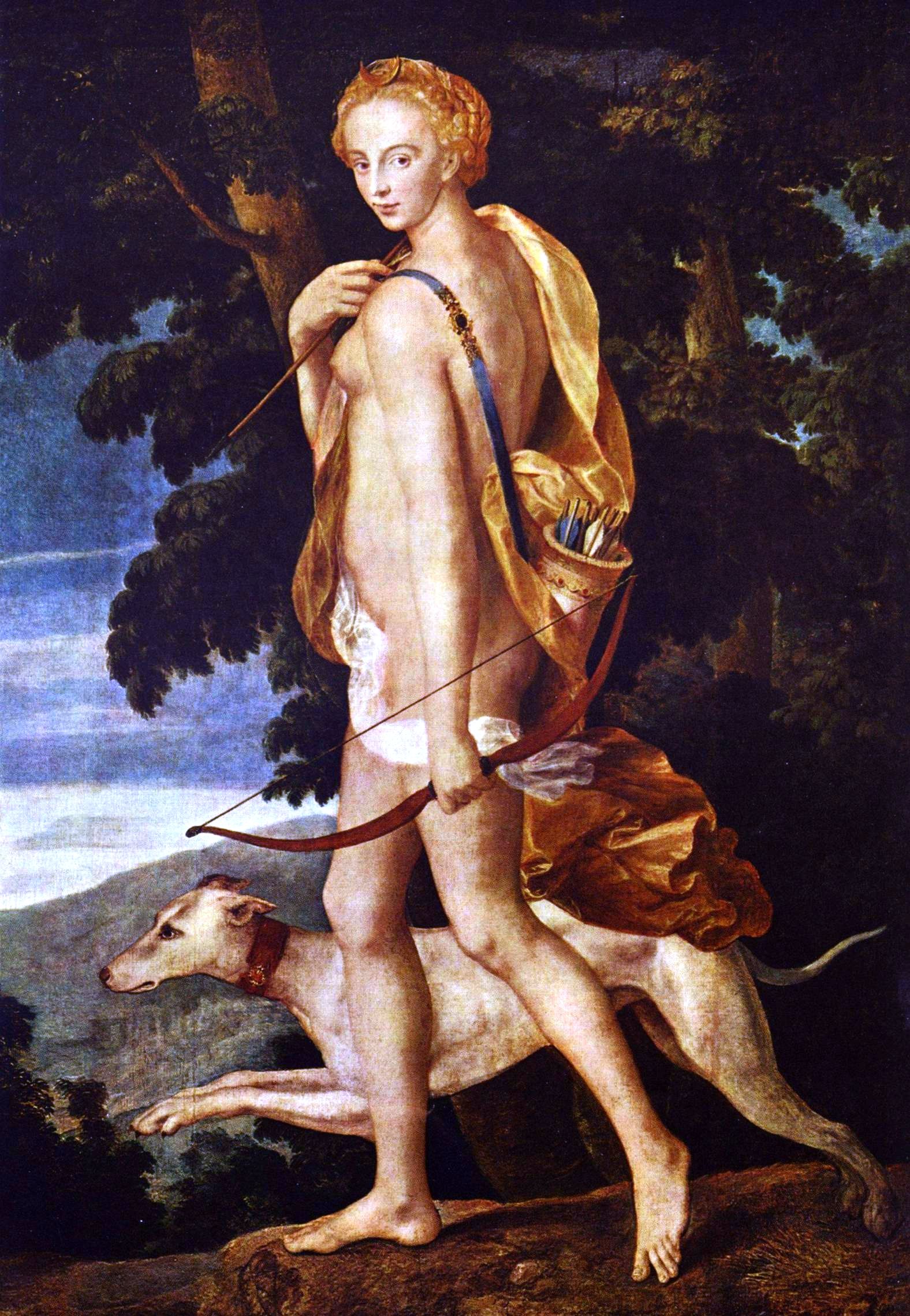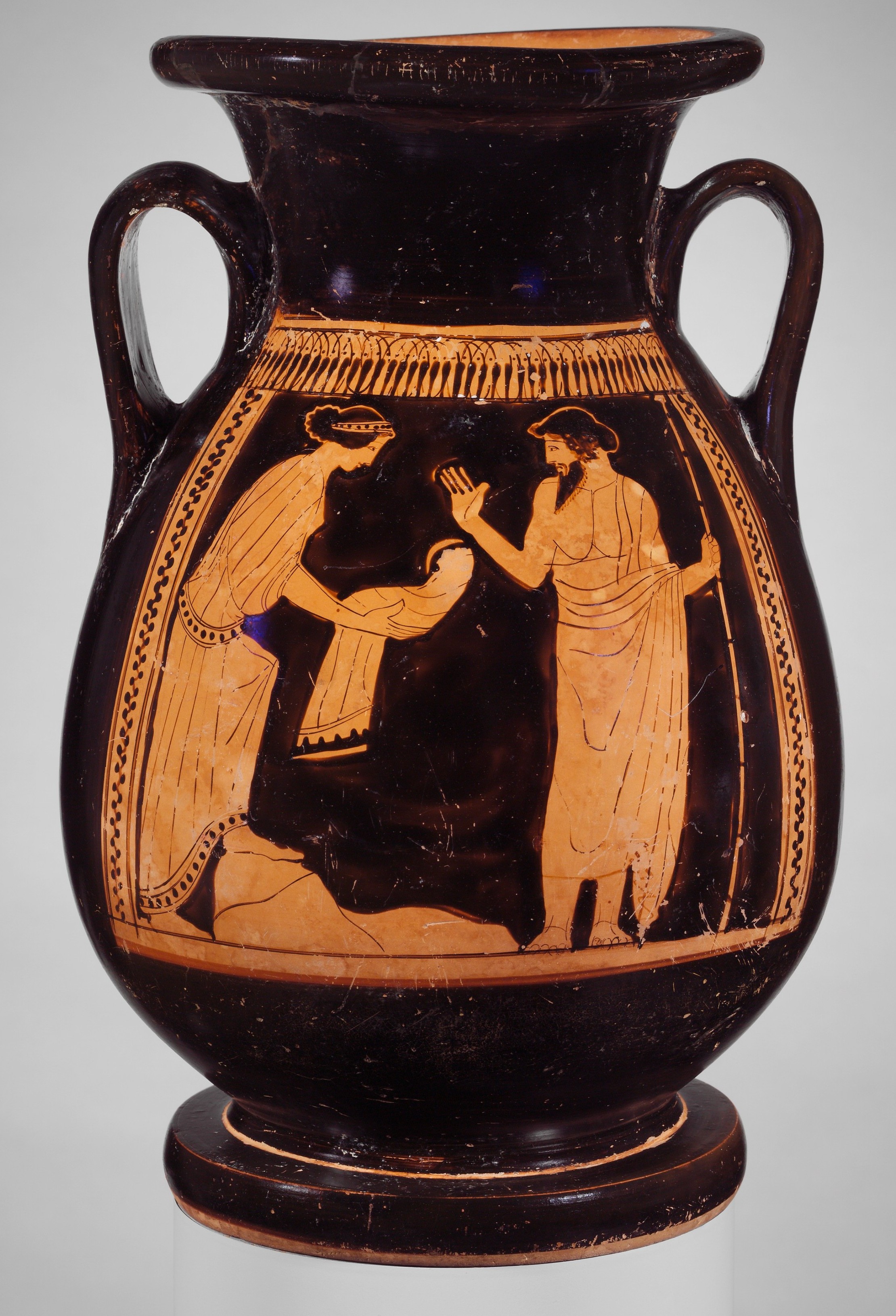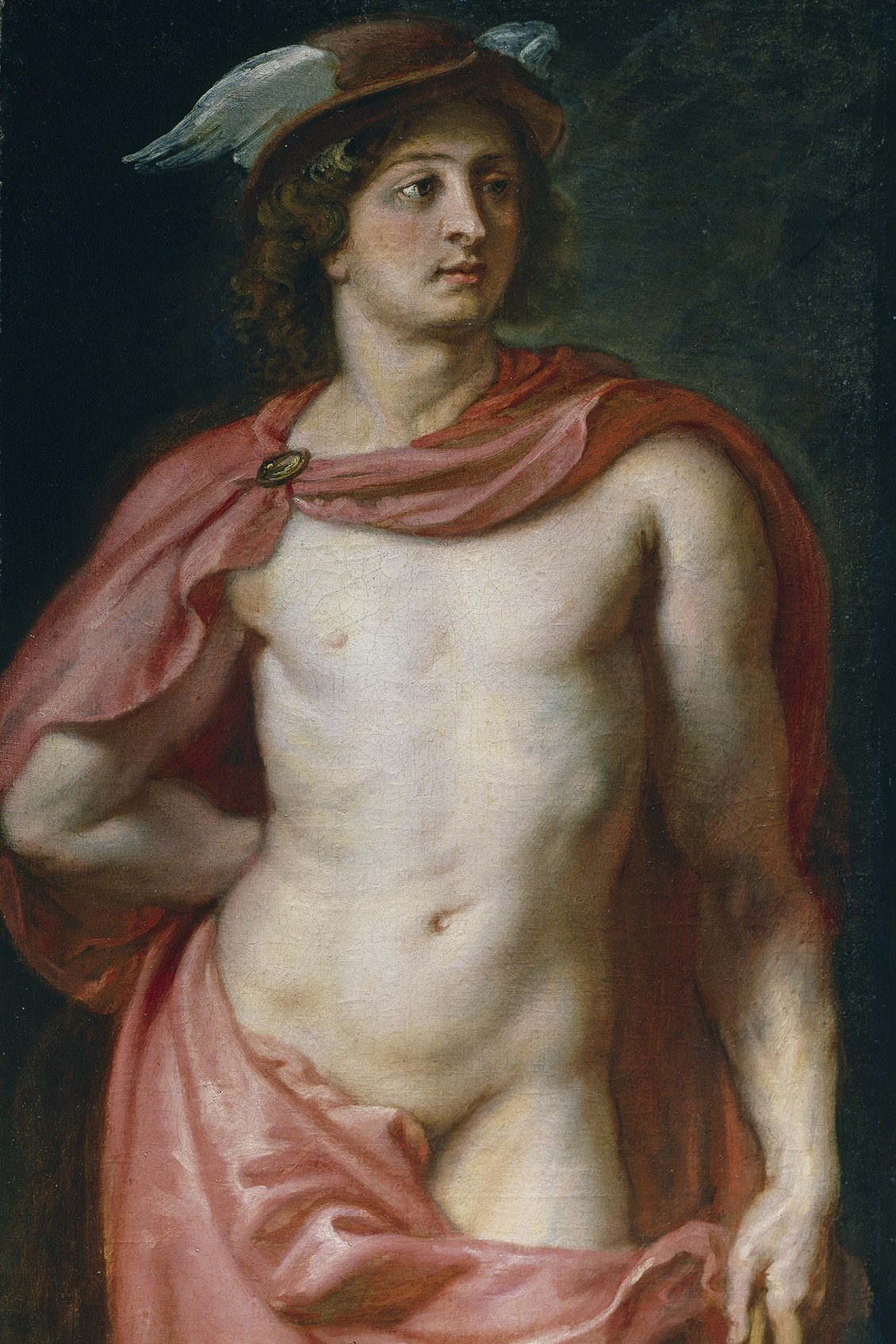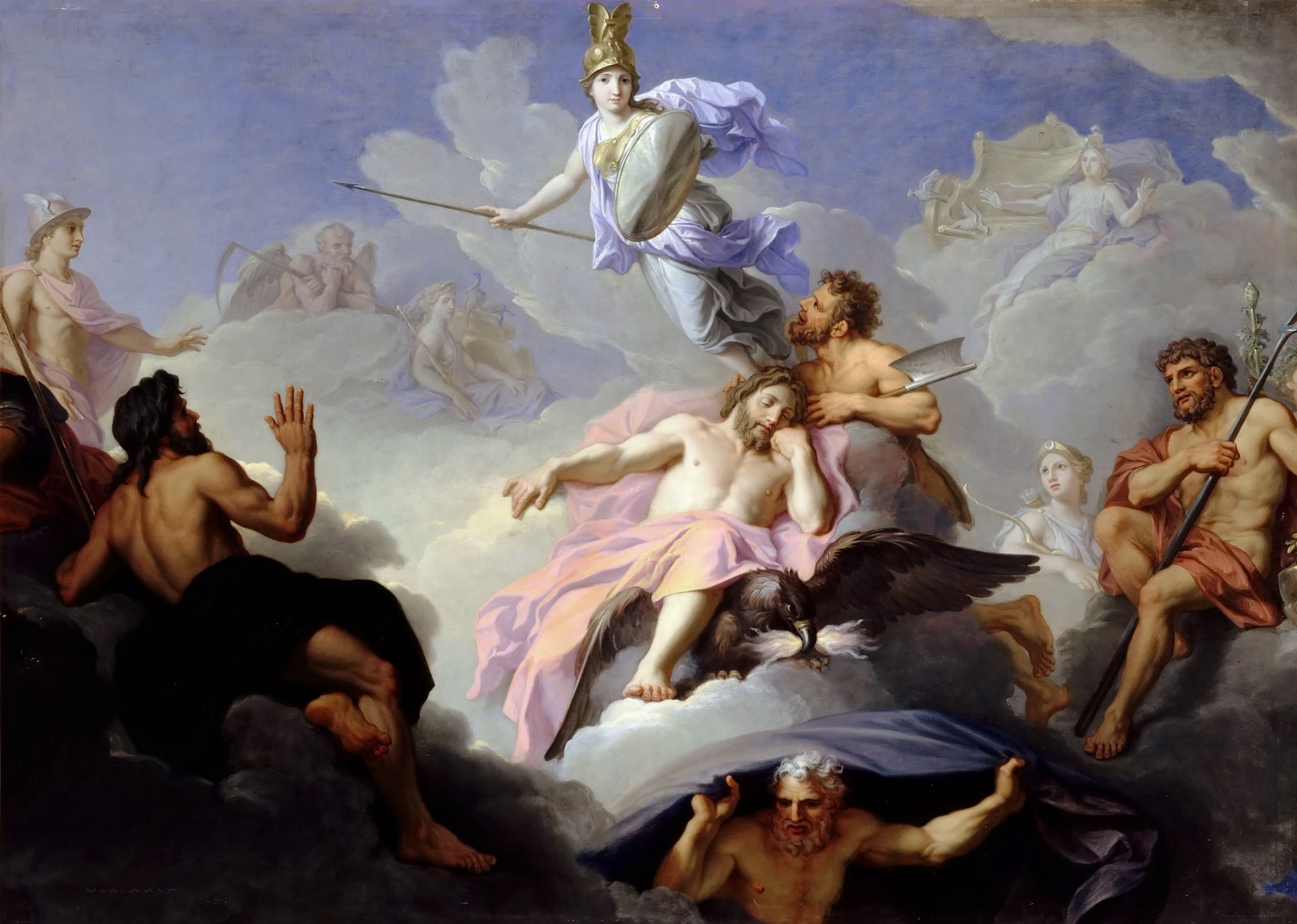
When the young god strode into the halls of Olympus with his bow already drawn, the deathless gods sprang up from their seats and trembled. Every one of them flinched, and only his mother stayed calm. Leto went to him, loosened the bright bow from his grip, closed the quiver, and hung his bow and quiver from a golden peg against a pillar in his father’s house. Then Zeus welcomed him, poured him nectar in a golden cup, and the gods sat back down. This is how the Homeric Hymn to Apollo opens: not with a birth but with a room full of immortals afraid of a boy, and the one woman unafraid of him because she had carried him.
The island that would not take her
She had paid dearly for the carrying. Pregnant and hounded by the jealousy of Hera, Leto had wandered the islands of the Aegean looking for anywhere that would take her son, and every land refused, terrified of the god it could feel coming. Only Delos, poor and rocky and barren, was desperate enough to bargain. It would host the birth, the island said, but only if Leto swore a great oath, by Earth, by Heaven and by the downward water of the Styx, that Apollo would build his first temple and oracle there and honour the wretched rock above all other places.
Leto swore. Even then the labour would not come, for Hera kept Eileithyia, goddess of childbed, penned on Olympus and ignorant of what was happening below. Nine days and nine nights Leto laboured, until the other goddesses lured Eileithyia down with a necklace strung on golden threads, nine cubits long. Then, clasping a palm tree by the streams of Inopus against Mount Cynthus, Leto bore him, twin of Artemis the huntress.
What he did next tells you what he is. Fed on nectar and ambrosia, the infant burst the golden bands they had wrapped him in and announced himself: The lyre and the curved bow shall ever be dear to me, and I will declare to men the unfailing will of Zeus.
Three things, spoken in the same breath: music, the bow, and prophecy. Everything Apollo becomes is folded into that first sentence.
The god in gold
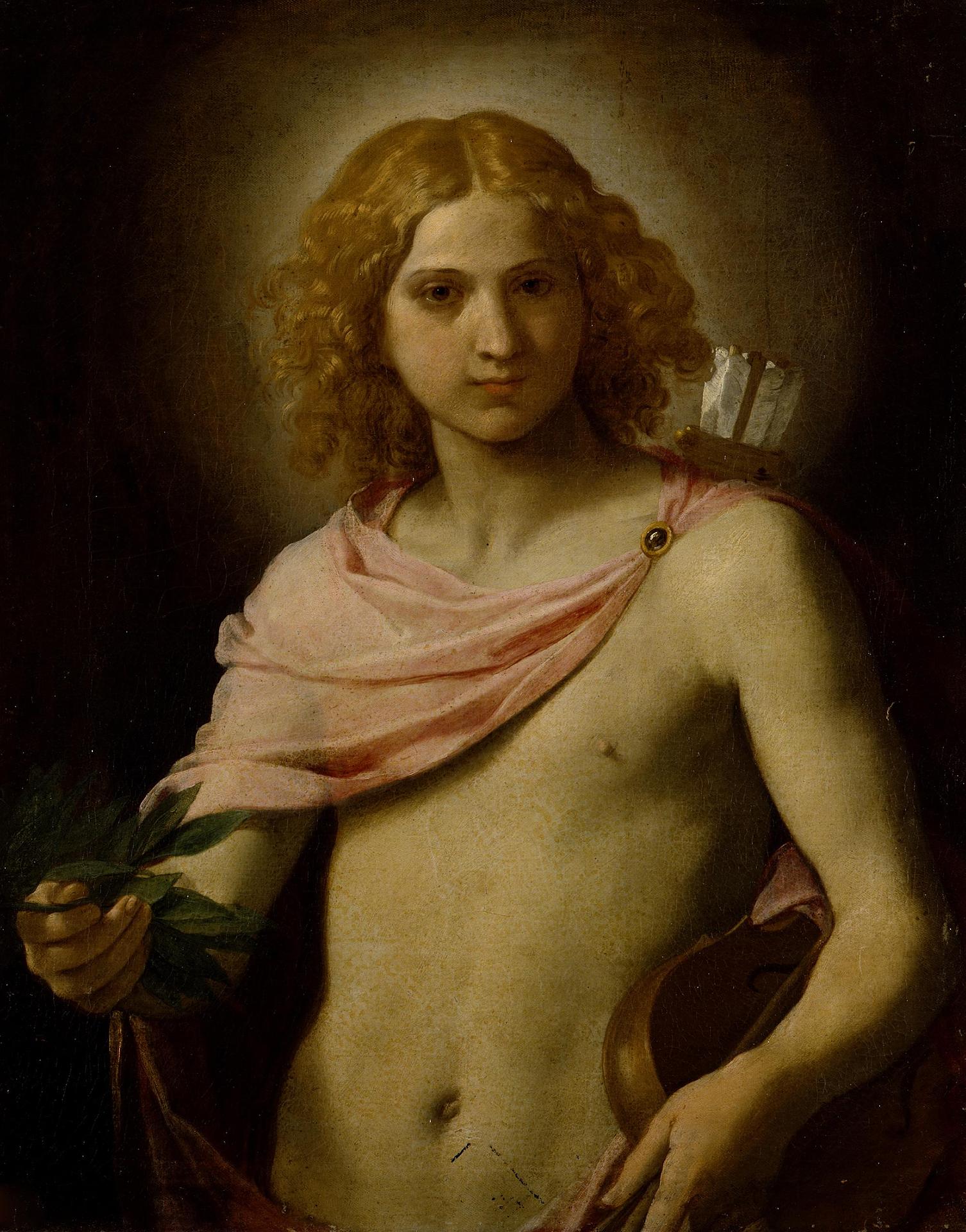
Callimachus, writing centuries later in Alexandria, paints the grown god in nothing but gold. Golden his tunic and his mantle, golden his lyre and his Lyctian bow and his quiver, golden even his sandals. He is beautiful and forever young; never, the poet insists, has so much as the down of manhood touched those girl-soft cheeks.
He is the herdsman who tended the mares of Admetus by the river Amphrysus, under whose eye every ewe bore twins. He is the founder of cities: Phoebus it is that men follow when they map out cities, for Phoebus himself weaves their foundations.
Where his healing dew falls, a place is kept free of plague. All the crafts of Apollo point the same way, towards order laid down and disorder kept out.
The dragon at the spring
The oracle was the hardest of them to found, and the founding was not gentle. Searching the mainland for the right ground, Apollo came first to the spring of Telphusa, who, jealous of her own quiet renown and unwilling to share it with a crowd of pilgrims, talked him out of building there and sent him on to Crisa, below the crags of Mount Parnassus. There he laid out the temple’s foundations, and Trophonius and Agamedes set the stone footing while countless men raised the walls. But a monster held the sweet spring beside it: a huge she-dragon, a bloody plague
who had also nursed the monster Typhaon on Hera’s behalf.
Apollo killed her with his bow. As the corpse rotted in the heat of the sun, the god named the place Pytho, from the Greek pythō, to rot,
and took the title Pythian for himself. (Note that in this, the oldest telling, the creature is nameless and female; the male serpent called Python, and the games said to commemorate his death, belong to later tradition that hardened the Hymn’s she-dragon into a name.) Then he went back and dealt with the lying nymph, hiding Telphusa’s stream beneath a crag for her deceit.
He still needed priests. Spotting a ship of Cretan sailors out of Cnossos, Apollo took the form of a dolphin, delphis, leapt aboard, and steered the terrified crew to Crisa to keep his temple for the rest of their days. From the dolphin came his cult-name Delphinios, and from Delphinios, Delphi. The name of the most famous oracle in the ancient world is the fossil of a god disguised as a fish.
There is another version of how the site changed hands, and it should not be smoothed away. Aeschylus, in the Eumenides, has no dragon and no killing at all: Delphi passes peacefully, in orderly succession, from Gaia to Themis to Phoebe and only then to Apollo, a gift rather than a conquest. The archaic Hymn wins the oracle by slaughter; the tragedian inherits it by grace. Both are old, and the Greeks kept both.
Nine days of arrows
The bow that founds can also punish, and the god who weaves the foundations of cities can unpick them. The Iliad opens on exactly that. Agamemnon has dishonoured Chryses, Apollo’s own priest, and refused to ransom back his daughter, so the old man walks the shore and prays, and Apollo hears. He comes down from the peaks of Olympus with anger in his heart, and his coming was like the night.
He sits apart from the ships and looses the first arrow, and terrible was the twang of the silver bow.
The shafts strike the mules first, then the swift dogs, then the men, and for nine days the pyres of the dead burn without pause. The healer and the plague-bringer are one archer. Apollo is Paian, the god hailed by the cry Hië, Hië, Paieon
that the Delphians first raised as he shot arrow after arrow into the dragon: Hail, Healer, shoot! The same voice begs him to loose the arrow and to hold it back.
A word about the light. The title calls him god of light, and the developed tradition agrees, eventually fusing Apollo with Helios the sun. The oldest sources do not. In Homer and Hesiod, Helios is the sun and Apollo is not, and the Hymn pointedly credits Helios, not Apollo, with rotting the dragon’s corpse. The luminous Apollo who steps into Olympus while the Muses sing and the Graces dance is a god of brightness and clarity long before he is literally the sun. The equation with the solar disc is a later synthesis, true of the Apollo the Greeks grew into rather than the one they began with.
The lyre and the bow together
Hold the pieces together and the god coheres. The lyre and the bow, the oracle and the plague, the founding of cities and the arrows that empty them are not a contradiction but a single argument about what clarity is for. Apollo is the power that makes things distinct: the note in tune, the prophecy that does not fail, the line between the sound city and the sick one. And a boundary, by its nature, has an edge that cuts.
“The lyre and the curved bow shall ever be dear to me, and I will declare to men the unfailing will of Zeus.” He was newborn when he said it, and every temple, every oracle and every arrow after was only the keeping of that first promise.
- Homeric Hymn 3 (to Apollo) 1–544the foundational narrative. Apollo’s entrance to Olympus with drawn bow and Leto disarming him (1–13); Leto’s wandering and the bargain with Delos (30–88); the nine-day labour, the detaining of Eileithyia and the nine-cubit necklace, and the birth by the palm on Delos (89–119); the infant’s declaration of the lyre, bow and prophecy (131–132); the search for an oracle site and the deceit of Telphusa (214–276); the temple foundations at Crisa (294–299); the slaying of the nameless she-dragon and the pythō/Pytho etymology by the sun’s heat (300–374); the punishment of Telphusa (375–387); and Apollo in dolphin form recruiting the Cretan sailors of Cnossos as Delphi’s first priests (388–544). The oldest and fullest account. (H. G. Evelyn-White trans., Loeb 57, 1914.)
- Homer, Iliad 1.9–52Apollo as plague-god answering his priest Chryses, descending from Olympus
like the night,
the clang of the silver bow, and the nine days of pestilence that strike first the mules and dogs, then the men. Establishes the far-shooter and the healer/plague duality. (A. T. Murray trans., Loeb 1924.) - Callimachus, Hymn 2 (to Apollo) 1–104the golden, ever-young Apollo and the breadth of his skills as archer, minstrel, seer, healer, herdsman (Nomios) and city-founder; the healing dew that keeps a city plague-free; and the origin of the ritual cry
Hië, Hië, Paieon
at the shooting of the dragon. (A. W. Mair trans., Loeb 129, 1921.) - Hesiod, Theogony 918–920 (with 404–406 for Leto’s parentage)the genealogy. Leto, daughter of Coeus and Phoebe, bore Apollo and Artemis to Zeus. (Evelyn-White trans., Loeb 57.)
- Aeschylus, Eumenides 1–8the peaceful-succession tradition of the Delphic oracle (Gaia, then Themis, then Phoebe, then Apollo), recorded here as the non-violent variant to the Hymn’s dragon-slaying acquisition. (458 BCE.)